
Get onchain perp margin right
Before you start monitoring LTV, you need to understand the two margin thresholds that govern every leveraged perpetual futures position. Think of these thresholds as the floor and the ceiling of your position’s safety zone. If your LTV crosses the lower threshold, the protocol liquidates your position. If it approaches the upper threshold, you are forced to add more collateral or reduce your exposure.
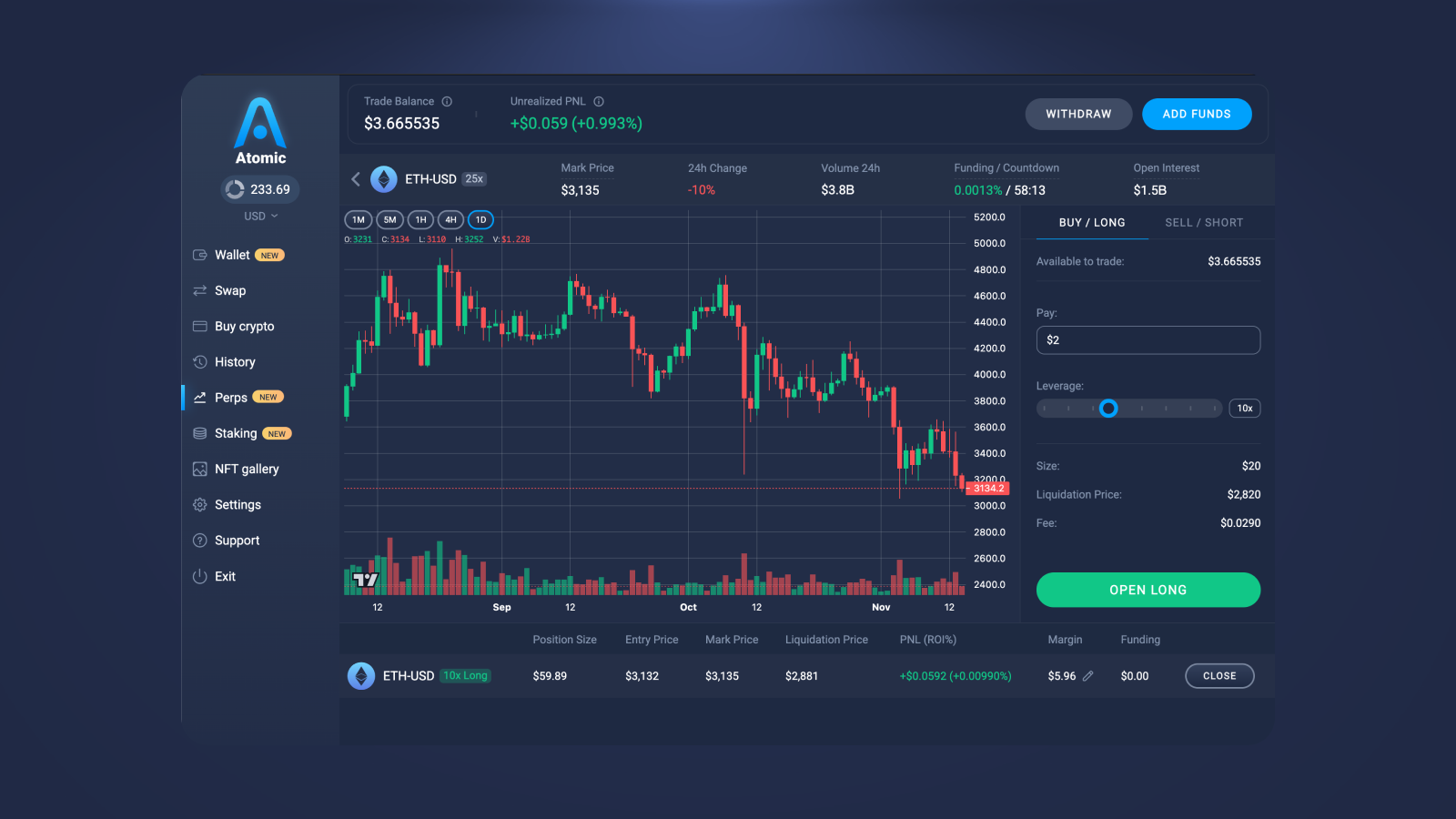
Initial margin is the collateral required to open a trade. The formula is straightforward: position size multiplied by mark price, divided by leverage. For example, opening a $10,000 position at 10x leverage requires $1,000 in initial margin [MetaMask]. This is the entry ticket to the market.
Maintenance margin is the lower, ongoing minimum required to keep the position open. This number is always lower than the initial margin. If the value of your collateral falls below this maintenance level due to market movement, your position becomes undercollateralized. At that point, liquidation bots or the protocol’s automated mechanisms will step in to close your trade and protect the lending pool.
Understanding the gap between these two numbers is the first step in optimizing margin efficiency. A wider gap means you have more room for price volatility before liquidation, but it also means you are locking up more capital than strictly necessary. The goal of real-time LTV monitoring is to keep your margin usage tight without accidentally drifting into the liquidation zone.
Work through the steps
2026 guide: Optimizing Onchain Perp Margin Efficiency with Real-Time LTV Monitoring works best as a clear sequence: define the constraint, compare the realistic options, test the tradeoff, and choose the path with the fewest hidden costs. That order keeps the advice usable instead of decorative. After each step, pause long enough to check whether the recommendation still fits the reader's actual situation. If it depends on perfect timing, unusual access, or a best-case budget, include a simpler fallback.

Common mistakes in onchain perp margin management
Even with real-time LTV monitoring, small operational errors can trigger liquidations or drain capital efficiency. Traders often confuse the collateral requirements needed to open a position with those required to hold it. This confusion leads to over-leveraging and unexpected margin calls.
Ignoring the gap between initial and maintenance margin
A frequent error is funding a position with exactly the initial margin amount. This leaves zero buffer for market volatility. Initial margin is the collateral required to open a trade, while maintenance margin is the lower ongoing minimum required to keep the position open [src-serp-1]. If the market moves against you, your LTV will hit the maintenance threshold before you can react. Always keep extra collateral to absorb normal price swings.
Overlooking protocol-specific liquidation penalties
Onchain perpetuals often charge liquidation penalties that are significantly higher than centralized exchanges. These penalties are taken from your collateral when a position is forcibly closed. If you are close to the liquidation price, a small move can wipe out a large portion of your equity. Check the specific penalty structure of the protocol you are using before entering a high-leverage trade.
Using stale price feeds for margin calculations
Relying on outdated mark prices can give a false sense of security. LTV monitoring depends on real-time data to be accurate. If your monitoring tool uses a delayed price feed, you might not see your LTV deteriorating until it is too late. Ensure your dashboard connects to the protocol’s official price oracle or a reliable, low-latency data source [src-serp-2].
Neglecting gas costs for margin top-ups
In onchain trading, gas fees are a real cost that reduces your effective collateral. If you need to add margin during high network congestion, the gas cost can be substantial. This reduces the net amount of collateral added to your position. Factor in estimated gas costs when calculating how much extra collateral you need to add to stay safe.
Onchain perp margin: what to check next
Before committing capital, it helps to understand how margin mechanics actually work onchain. Unlike centralized exchanges where a single "margin" figure often suffices, onchain perpetuals rely on two distinct thresholds to keep your position alive.
These questions cover the core mechanics of onchain leverage. For a deeper look at building with these systems, the Solana Foundation provides resources on building onchain perps [Solana]. Always verify the specific margin requirements of the dApp you are using before trading.
No comments yet. Be the first to share your thoughts!