
Set up your margin account
Onchain perpetual futures trading relies on margin to function. Margin is the collateral you deposit to open and hold a position. It acts as a guarantee against potential losses. Without it, the exchange cannot enforce the trade.
To maximize capital efficiency, you need a platform that supports unified margin. Unified margin allows a single pool of assets to back multiple positions across different chains. This means your idle collateral in one market can support leverage in another, rather than sitting frozen.
The setup process is straightforward but requires attention to detail. You will connect your wallet, choose a platform with cross-chain capabilities, and deposit your initial collateral. The goal is to get your funds into the margin account so you can start trading.
Open your preferred Web3 wallet and connect to the trading platform. Ensure you are on the correct network for the chain you intend to trade on. Most unified margin platforms support multiple chains, so verify the connection matches your target market.
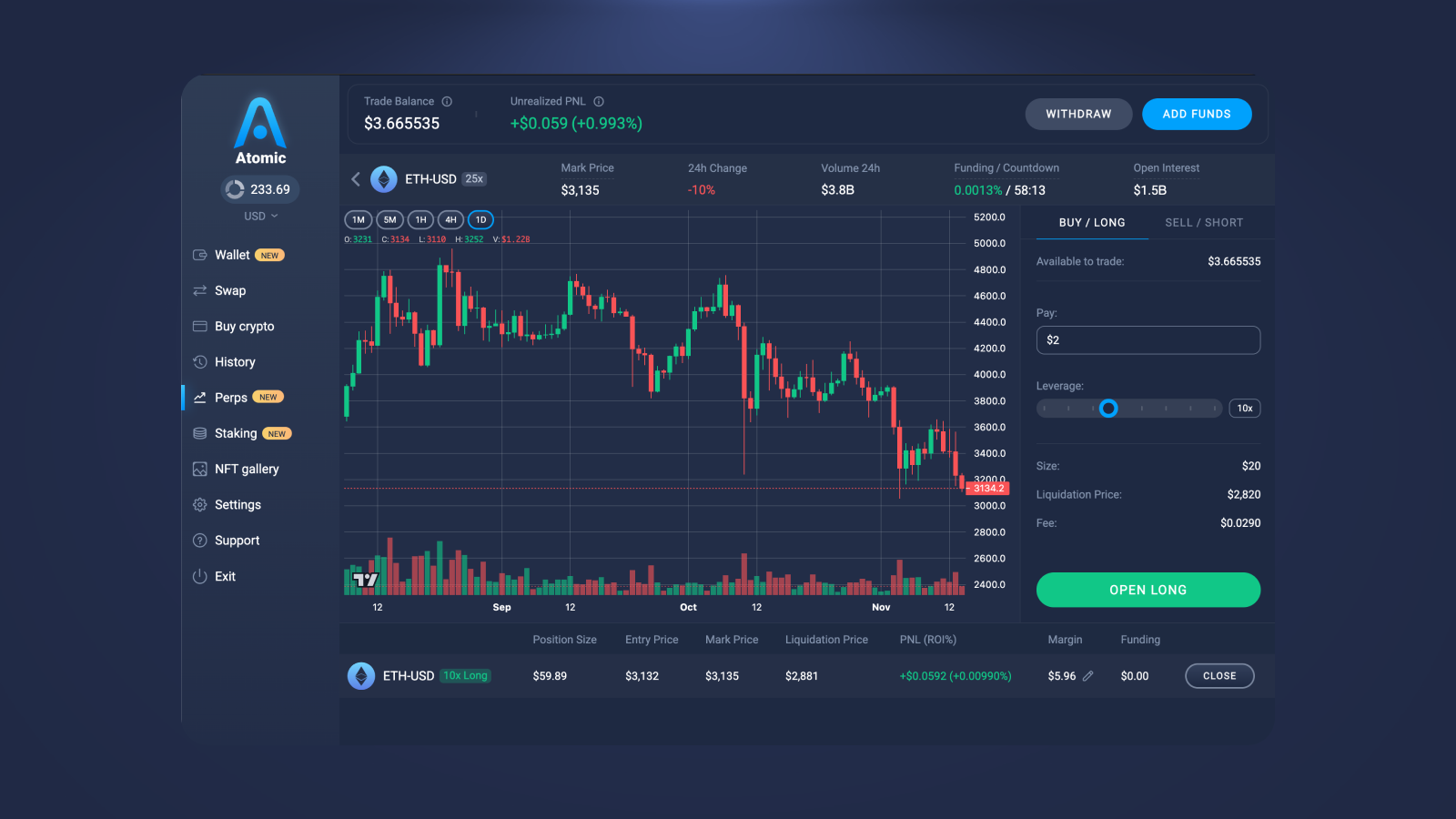
Transfer your chosen assets (USDC, ETH, or native tokens) into the platform’s margin account. This deposit becomes your initial margin. Keep in mind that maintenance margin is the lower threshold required to keep positions open, so ensure your deposit covers both entry and buffer requirements.
Check that your deposited funds are visible across all supported chains in the unified margin pool. This confirms your capital is shared efficiently. You can now open positions on any connected chain using the same collateral balance.
Initial margin vs maintenance margin
Understanding onchain perp margin requires distinguishing between two distinct capital requirements: initial margin and maintenance margin. Initial margin is the collateral locked to open a position. Maintenance margin is the lower threshold that keeps the position alive. Confusing these two leads to unexpected liquidations.
Initial margin: the entry cost
Initial margin is the deposit required to open a leveraged trade. It acts as a security deposit against potential losses. Exchanges calculate this as a percentage of the position's notional value. For example, 10x leverage typically requires 10% initial margin.
This capital is locked in the smart contract or exchange account. It cannot be used for other trades until the position is closed. Higher leverage means lower initial margin requirements, which increases capital efficiency but also amplifies risk.
Maintenance margin: the liquidation threshold
Maintenance margin is the minimum collateral percentage required to keep a position open. It is always lower than the initial margin. If your account equity falls below this level, the position is at risk of liquidation.
Liquidation occurs when the maintenance margin is breached. The exchange or protocol automatically closes the position to prevent further losses. This protects the lender of the leverage from default. Understanding this threshold is critical for managing risk.
Comparison: 10x leverage example
The table below illustrates the difference for a $10,000 position with 10x leverage.
| Metric | Value | Purpose |
|---|---|---|
| Initial Margin | $1,000 (10%) | Required to open the trade |
| Maintenance Margin | $750 (7.5%) | Minimum to keep the trade open |
| Liquidation Price | $9,250 | Price where maintenance margin is breached |
| Buffer | $250 | Loss tolerance before liquidation |
Practical implications for traders
The gap between initial and maintenance margin is your loss buffer. In the example above, you can lose $250 before liquidation. This buffer shrinks as leverage increases. Higher leverage means less room for error.
Always monitor your maintenance margin level. Set stop-loss orders to stay within your buffer. Understanding these mechanics helps you manage capital efficiency without overexposing your account to liquidation risk.


As an Amazon Associate, we may earn from qualifying purchases.
Monitor real-time risk metrics
Onchain perp margin management relies on live data, not static snapshots. Funding rates shift with market sentiment, and price volatility can erode your health factor in minutes. To prevent unexpected liquidations, you must track your position health and funding costs in real time.
Your health factor is the primary indicator of liquidation risk. Unlike centralized exchanges that may hide liquidation prices behind opaque interfaces, onchain perps often display these levels directly on the dashboard. Aim to keep your health factor above 1.5 to provide a buffer against sudden market spikes. If it drops below 1.2, you are in the danger zone and should consider adding margin or reducing position size immediately.
Perpetual futures use funding rates to keep the contract price tethered to the spot price. When funding is positive, long traders pay short traders; when negative, the reverse occurs. High funding rates can erode your capital even if the price doesn't move against you. Monitor these rates to avoid entering positions when costs are prohibitively high, which often happens during extreme market sentiment.
Manual monitoring is insufficient for managing onchain perp margin effectively. Use tools like HyperTracker to set up real-time alerts for price targets, funding rate thresholds, and health factor levels. These read-only wallet trackers allow you to stay informed without exposing your private keys, ensuring you can react to market changes even when you are away from your screen.
Manage liquidation risk proactively
Liquidation is the final outcome of poor margin management. By combining real-time health factor monitoring with proactive risk management, you can protect your capital. Remember that onchain perps are immutable; once a liquidation occurs, there is no customer support to reverse the transaction. Always prioritize capital preservation over maximizing leverage.
Avoid common margin mistakes
Capital efficiency in onchain perpetuals relies on precision, not just leverage. Traders often mistake high leverage for smart capital use, but ignoring the hidden costs of holding positions can drain your margin faster than market volatility. The following errors are the most common reasons traders fail to maintain efficient onchain perp margin.
Over-leveraging into thin liquidity
Using maximum leverage assumes you can exit before a small wick triggers liquidation. In onchain markets, liquidity can fragment across multiple protocols, making slippage unpredictable. A position that looks safe at 10x leverage can be wiped out by a 10% price gap if the order book is thin.
The fix: Calculate your liquidation price based on realistic slippage, not the current mark price. Keep your effective leverage lower than the platform’s maximum to absorb sudden volatility without immediate liquidation.
Ignoring funding rate drag
Perpetual futures do not expire, so they use funding rates to tether the contract price to the underlying spot price. If you hold a long position during a period of high positive funding, you pay shorts every 8 hours (or whatever the interval is). Over weeks or months, these payments compound into a significant cost that erodes profits.
Failing to add collateral during volatility
Margin requirements often scale with volatility. When the market swings wildly, the protocol may increase the maintenance margin requirement to protect the system. If you do not add collateral during these spikes, your position may be liquidated at the worst possible moment—right when the market is most volatile.
The fix: Set up automated alerts for your health factor or margin ratio. Have a plan to deposit additional stablecoins or assets before volatility spikes, rather than reacting after the liquidation threshold is breached.
Verify your trade execution
Before you walk away from your screen, confirm that the onchain perp trade executed exactly as intended. Blockchain transactions are irreversible, so a quick verification step protects your capital efficiency and prevents costly errors.
Open your portfolio tracker or a block explorer to review the recent transaction. Look for the specific contract interaction with the perp protocol’s margin engine. Cross-reference the position size, entry price, and leverage multiplier with your execution confirmation. If you use a tracker like CoinTracker, ensure the margin trade is categorized correctly so your historical data remains accurate.
Check your current margin balance and liquidation price. Ensure the deposited collateral matches your expectations and that the system has recognized the new position. If the numbers don’t align, take a screenshot of the transaction hash and contact the protocol’s support channel immediately.
No comments yet. Be the first to share your thoughts!