

Onchain perpetual margin defined
Onchain perpetual margin is a decentralized trading mechanism that uses smart contracts to manage leverage, collateral, and liquidations without a central intermediary. Unlike traditional off-chain margin, where an exchange holds your funds in a private database, onchain margin locks your assets directly into a verified contract on the blockchain. This transparency allows anyone to audit the health of the protocol and the solvency of the market maker in real time.
In traditional finance, margin is a promise backed by the exchange’s balance sheet. If the exchange fails or freezes withdrawals, your collateral is at risk regardless of the market price. Onchain perpetuals remove this counterparty risk. Your collateral remains in your wallet or a multi-sig contract until a trade is executed, and the smart contract automatically calculates your maintenance margin based on real-time oracle data. If your position value drops below the required threshold, the contract triggers a liquidation instantly, returning your remaining funds to your wallet rather than letting the exchange absorb the loss.
This shift from custodial to non-custodial leverage changes how traders manage risk. You are no longer trusting a company’s solvency but verifying the code’s logic. The primary keyword phrase, onchain perpetual margin, refers specifically to this infrastructure where the margin requirement is enforced by immutable rules rather than manual oversight. For a deeper understanding of how leverage and maintenance margin function in these systems, MetaMask provides a detailed breakdown of the mechanics involved.
Cross-margin vs isolated margin
Choosing between cross and isolated margin defines how your account handles risk during volatile market swings. The decision impacts your capital efficiency and your exposure to liquidation events. Understanding the structural difference helps you align your margin mode with your risk tolerance.
Isolated margin: Contained risk
Isolated margin assigns a fixed amount of collateral to a single position. If that trade moves against you, only the allocated funds are at risk. The rest of your portfolio remains untouched, protecting you from a total account wipeout. This mode acts like a firebreak, stopping losses from spreading to your other positions.
Cross margin: Shared collateral
Cross margin uses the entire balance of your perpetuals portfolio as collateral for all open positions. Gains in one position can offset losses in another, potentially lowering your liquidation price. However, a severe downturn can drain your entire account balance. This mode offers higher capital efficiency but carries the risk of total loss.
| Feature | Isolated Margin | Cross Margin |
|---|---|---|
| Collateral Source | Position-specific funds | Total portfolio balance |
| Risk Exposure | Limited to allocation | Entire account balance |
| Liquidation Threshold | Higher per position | Lower per position |
| Capital Efficiency | Lower | Higher |
| Best Use Case | High-volatility trades | Diversified hedging |
The choice between these modes depends on your strategy. Isolated margin suits traders who want to cap their downside on speculative bets. Cross margin benefits those who maintain a balanced, diversified portfolio where positions can hedge each other. AI risk engines monitor these dynamics in real-time, adjusting liquidation thresholds to prevent unnecessary liquidations while preserving capital.
AI risk engines in action
Use this section to make the Onchain Perpetual Margin decision easier to compare in real life, not just on paper. Start with the reader's actual constraint, then separate must-have requirements from details that are merely nice to have. A practical choice should survive normal use, maintenance, timing, and budget. If a recommendation only works in an ideal situation, call that out plainly and give the reader a fallback path.
The simplest way to use this section is to write down the must-have criteria first, then compare each option against those criteria before weighing nice-to-have features.
Cross-chain margin strategies
Using a unified margin account across multiple blockchains allows traders to deploy capital more efficiently. Instead of locking funds in isolated silos, a single asset like ETH or USDC can secure positions on different networks. This approach reduces the friction of bridging assets and minimizes the idle capital that often sits unused on chains with low demand.
Liquidity aggregation is the primary benefit. By pooling margin across chains, protocols can offer deeper order books and tighter spreads. This is particularly relevant as new platforms launch, such as Solayer’s Margin Trade on the Solana Virtual Machine, which aims to bring perpetual futures to SVM-based ecosystems. Integrating these diverse liquidity pools helps stabilize prices during volatile market swings.
However, cross-chain margin introduces complexity. Risk engines must now track exposure across distinct consensus layers, each with different finality times and bridge risks. If one chain experiences a delay or a bridge exploit, the health of the entire margin account can be threatened. AI risk engines are essential here, dynamically adjusting liquidation thresholds based on real-time cross-chain data rather than static, chain-specific rules.
Managing liquidation risk
Onchain perpetual margin amplifies gains, but it also accelerates losses. AI risk engines reduce liquidation frequency by monitoring positions in real time and adjusting exposure before the market moves against you. These systems analyze volatility, funding rates, and order book depth to flag danger zones early.
To keep your account healthy, follow these steps to manage risk effectively.
Define your exit point before entering a trade. AI tools can calculate optimal stop-loss levels based on current market volatility, ensuring you exit with minimal loss if the trend reverses.
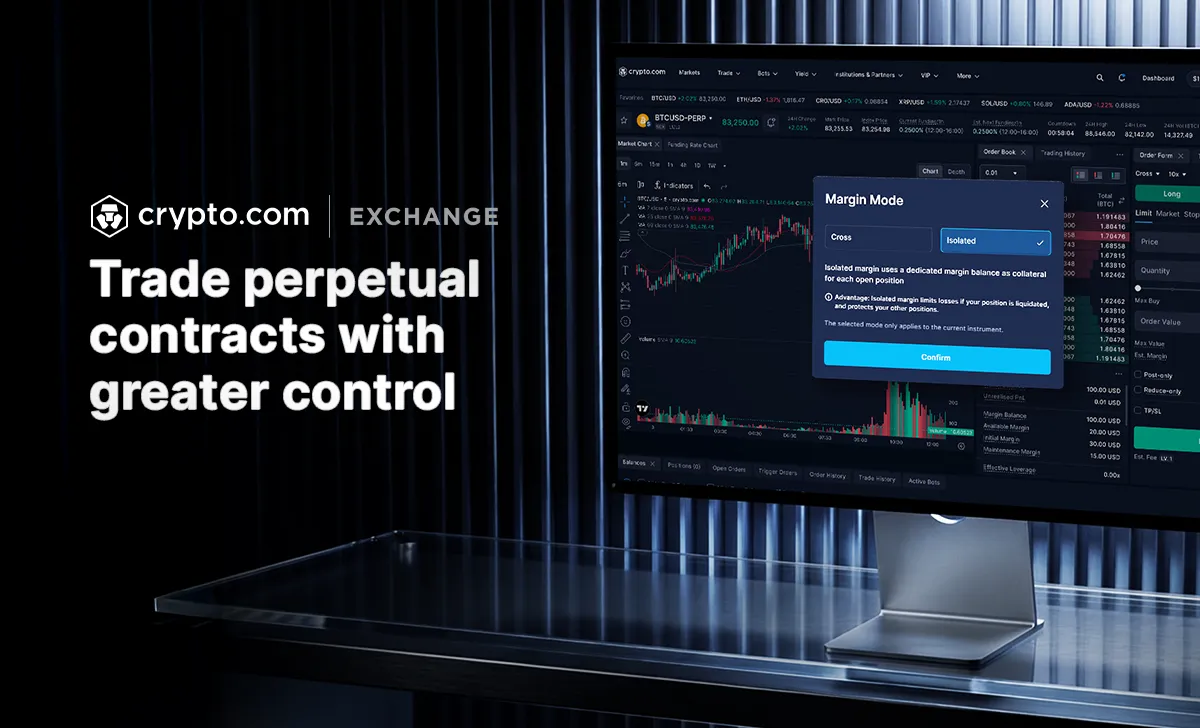
Isolated margin limits risk to the specific position. Unlike cross margin, which uses your entire balance as collateral, isolated margin prevents a single failed trade from draining your whole account.
High funding rates can erode your capital over time. Use AI dashboards to track these rates and avoid holding positions during peak cost periods.
| Margin Mode | Risk Scope | Best For |
|---|---|---|
| Isolated | Position only | High leverage trades |
| Cross | Entire balance | Long-term holds |
Common questions on margin
Margin is the collateral deposited to open a perpetual futures position, acting as a guarantee against potential losses. It determines your buying power and defines the threshold for liquidation when the market moves against you.
How does margin work in perpetuals?
Margin serves as the security deposit for your trade. Perpetual contracts do not have an expiration date, so maintaining sufficient margin is essential to keep the position open. If your account equity falls below the maintenance margin level, the exchange will liquidate your position to cover the debt.
What is the difference between isolated and cross margin?
Isolated margin limits risk to the specific amount allocated to a single position. If that trade is liquidated, you only lose that portion. Cross margin shares your entire account balance as collateral across all open positions, reducing the likelihood of liquidation but exposing your full balance to risk.
How does AI risk engine technology affect margin requirements?
AI risk engines analyze real-time market volatility and order book depth to adjust margin requirements dynamically. This reduces the chance of unnecessary liquidations during sudden price spikes. By predicting risk more accurately than static models, these systems help traders maintain positions with less capital overhead.
No comments yet. Be the first to share your thoughts!