
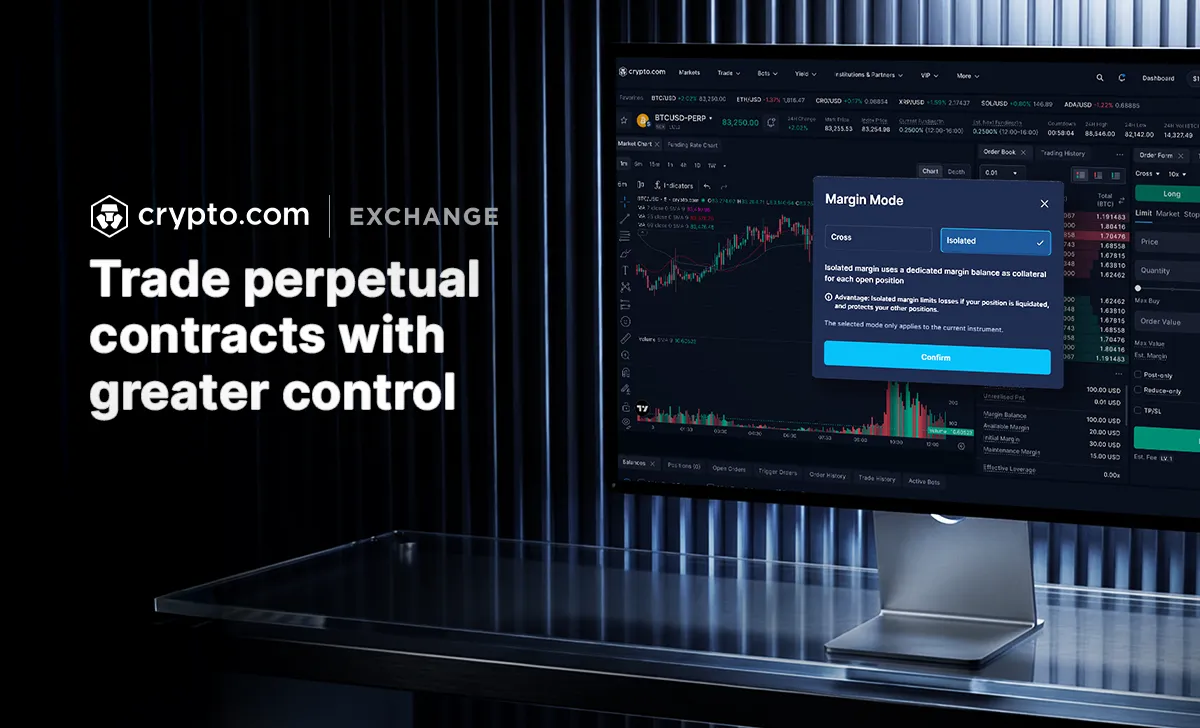
Onchain perpetual margin defined
Onchain perpetual margin refers to the collateral system that supports perpetual futures contracts where the entire lifecycle—order matching, settlement, and custody—occurs on a blockchain. Unlike centralized exchanges (CEXs) that hold user funds in private databases, onchain perpetuals rely on smart contracts to manage leverage. This structural shift moves the burden of fund security from a corporate entity to code, fundamentally altering how traders interact with margin requirements.
The mechanics of margin in this environment mirror traditional finance but execute through transparent ledger entries. According to MetaMask, initial margin is the specific collateral required to open a trade, calculated as the position size multiplied by the mark price, divided by the leverage ratio. For instance, a $10,000 position at 10x leverage demands $1,000 in initial margin. This upfront capital acts as a performance bond, ensuring the trader has skin in the game.
Once the position is open, the trader must maintain a maintenance margin, a lower threshold that keeps the position alive. If the account balance falls below this level due to market movements, the position faces liquidation. On Trust Wallet, this process is described as the ongoing minimum required to keep the position open. The key distinction in onchain trading is that these calculations are visible and verifiable by anyone, removing the opacity that often characterizes centralized margin calls.
The liquidation problem in DeFi
Onchain perpetual margin trading relies on a rigid, automated mechanism that often prioritizes protocol solvency over trader survival. When a position’s value drops below a predefined maintenance threshold, the system triggers a liquidation to cover the shortfall. This process is binary and instantaneous: if the collateral cannot be replenished fast enough, the position is forcibly closed. While this design protects the lending pool from insolvency, it frequently results in inefficient outcomes for traders, turning temporary market volatility into permanent capital loss.
Traditional onchain models operate on static rules that do not account for real-time market conditions. A trader might be liquidated during a brief, high-volatility spike that would have resolved itself moments later if the system had allowed a small buffer. This "liquidation cascade" effect is particularly dangerous in decentralized finance. When one position is forcibly sold, it drives the price down further, triggering liquidations for other traders holding similar positions. This creates a feedback loop that amplifies price drops and erodes market depth, leaving traders with positions closed at significantly worse prices than necessary.
The inefficiency stems from the lack of nuance in these automated systems. They treat all margin breaches as equal emergencies, regardless of the underlying asset’s liquidity or the broader market context. This one-size-fits-all approach means that capital is often wasted on unnecessary closures, reducing the overall efficiency of onchain perpetual margin markets. The result is a system that is robust against bad debt but brittle in the face of normal market fluctuations, creating a clear need for more adaptive risk management strategies.
AI engines for dynamic risk
On-chain perpetual margin relies on automated market makers (AMMs) to set prices and manage liquidity. In traditional centralized exchanges, risk engines use historical volatility and order book depth to adjust margin requirements. On-chain, the data is transparent but often sparse. Price feeds can lag during high volatility, creating a window where positions are undercollateralized or, conversely, where healthy positions face premature liquidation.
AI-driven risk engines address this gap by processing real-time on-chain data alongside off-chain market signals. These systems monitor not just the mark price, but also funding rates, open interest, and liquidity pool depth. By predicting short-term volatility spikes, the engine can proactively raise maintenance margin requirements before a liquidation cascade begins. This dynamic adjustment acts as a buffer, absorbing shocks that would otherwise trigger forced liquidations.
The result is a more stable trading environment for on-chain perpetual margin users. Instead of static margin levels that ignore market context, AI engines provide a responsive layer of protection. This reduces the friction of trading on decentralized platforms, bringing the risk management sophistication closer to that of centralized exchanges while maintaining the transparency of on-chain infrastructure.
Comparing margin protocols
Onchain perpetual margin protocols differ significantly in how they balance capital efficiency against liquidation risk. While centralized exchanges rely on opaque order books, onchain platforms use varying risk engine architectures to manage exposure. The choice of protocol often hinges on whether the trader prioritizes maximum leverage or the sophistication of the automated risk management system.
The table below compares leading onchain perpetual margin platforms based on their leverage limits, liquidation mechanisms, and risk engine features. These metrics reflect the current state of decentralized margin trading infrastructure.
| Protocol | Max Leverage | Liquidation Type | Risk Engine |
|---|---|---|---|
| Hyperliquid | 50x | Auto-deleveraging (ADL) | Centralized-style risk engine |
| dYdX | 5x | Liquidation engine + ADL | Onchain risk oracle |
| GMX | 50x | Liquidation threshold + Auction | Decentralized oracle |
| Margin Trade (Solayer) | 100x | Real-time margining | High-frequency risk engine |
Protocols like Hyperliquid and Solayer’s Margin Trade emulate centralized exchange speeds, offering high leverage but requiring robust risk engines to prevent cascading liquidations. In contrast, dYdX and GMX prioritize decentralization, often resulting in lower leverage caps but more transparent liquidation processes. Understanding these structural differences is essential for traders navigating onchain perpetual margin.
Capital Efficiency Gains
AI-driven risk engines transform onchain perpetual margin by dynamically adjusting collateral requirements based on real-time volatility. Unlike static leverage models that demand fixed initial margins regardless of market conditions, AI systems analyze micro-structure data to identify precise liquidation thresholds. This precision allows traders to deploy capital more effectively, reducing the dead weight of excess collateral while maintaining robust risk protections.
The mathematical advantage is clear. Standard perpetual futures often require a flat initial margin calculation, such as position size divided by leverage. An AI engine might lower this requirement during low-volatility periods, freeing up liquidity for other opportunities, while instantly tightening it when risk spikes. This dynamic adjustment directly improves Return on Invested Capital (ROIC) by ensuring every dollar of collateral is working at maximum efficiency.
This efficiency does not come at the cost of safety. The AI continuously monitors order book depth and funding rates, adjusting margins to prevent premature liquidations during normal market noise. By aligning collateral requirements with actual risk exposure rather than conservative estimates, traders retain more capital for compounding and strategic flexibility.
What is the margin in perpetuals?
Margin in perpetuals functions as the collateral you lock up to trade with leverage. It acts as a security deposit, ensuring you have enough skin in the game to cover potential losses. Without this buffer, the protocol cannot guarantee that winning traders get paid when the market moves against a leveraged position.
There are two distinct margin levels that govern your position: initial margin and maintenance margin. Initial margin is the amount required to open the trade. It is calculated as position size multiplied by the mark price, divided by your leverage. For example, at 10x leverage, opening a $10,000 position requires $1,000 in initial margin.
Maintenance margin is the lower, ongoing minimum required to keep the position open. As long as your account balance stays above this threshold, the position remains active. If market volatility drives your losses below the maintenance margin, the position faces liquidation. The gap between your current equity and this maintenance level is known as your margin ratio, which AI risk engines monitor to predict liquidation events before they happen.
No comments yet. Be the first to share your thoughts!