
Get onchain perp margin right
Start to Onchain Perp Margin with the constraint that matters most in real life: space, timing, budget, skill level, maintenance, or availability. That first constraint should shape the rest of the plan instead of appearing as an afterthought. Keep the first pass simple enough to verify. Compare the main options against the same criteria, remove choices that only work in ideal conditions, and save optional upgrades for later.
The simplest way to use this section is to write down the real constraint first, compare each option against it, and choose the path that still works outside ideal conditions.
Work through the steps
to Onchain Perp Margin works best as a clear sequence: define the constraint, compare the realistic options, test the tradeoff, and choose the path with the fewest hidden costs. That order keeps the advice usable instead of decorative. After each step, pause long enough to check whether the recommendation still fits the reader's actual situation. If it depends on perfect timing, unusual access, or a best-case budget, include a simpler fallback.

Common mistakes that drain perp margin accounts
Margin trading amplifies both gains and losses. Small errors in position sizing or fee estimation often trigger liquidation before the market moves against you. Fixing these specific mistakes protects your capital and improves long-term survival rates.
Ignoring maintenance margin requirements
Many traders calculate their entry based only on the initial margin required to open the position. This overlooks the maintenance margin—the lower threshold that keeps the position alive. If your collateral drops below this level, the protocol liquidates your position, often at a loss.
Check the maintenance margin ratio for every asset you trade. On some platforms, this varies by volatility. Keep your equity well above this line to avoid sudden, forced exits during minor price dips.
Underestimating funding rates and fees
Perpetual contracts use funding rates to peg the price to the underlying asset. In strong trends, these rates can be substantial. A long position in a bullish market might require you to pay funding every 8 hours, slowly eroding your margin over time.
Traders often ignore these recurring costs when calculating break-even points. If you hold a position for days or weeks, funding fees can exceed your expected profit. Factor the current funding rate into your risk model before entering.
Overleveraging on volatile assets
High leverage reduces the price movement needed to liquidate your position. While 50x leverage seems attractive, a 2% adverse move wipes out your entire margin. This is especially dangerous with volatile altcoins or during low-liquidity periods.
Start with conservative leverage, such as 3x to 5x. This gives your trade room to breathe through normal market noise. Only increase leverage if you have a clear edge and a strict stop-loss strategy.
Failing to account for slippage
Onchain trades execute against liquidity pools or order books. Large orders can move the price against you, a phenomenon called slippage. If you place a market order for a large position, you might receive a worse entry price than expected, immediately putting you in the red.
Use limit orders when possible to control your entry price. For large positions, split your order into smaller chunks to minimize market impact. Always check the current spread and depth before executing.
Onchain perp margin: what to check next
Before opening a leveraged position, it helps to understand the mechanics of collateral and the specific risks of onchain environments. These answers address the most common practical objections traders face when switching from centralized exchanges to decentralized protocols.
What is the margin in perp trading?
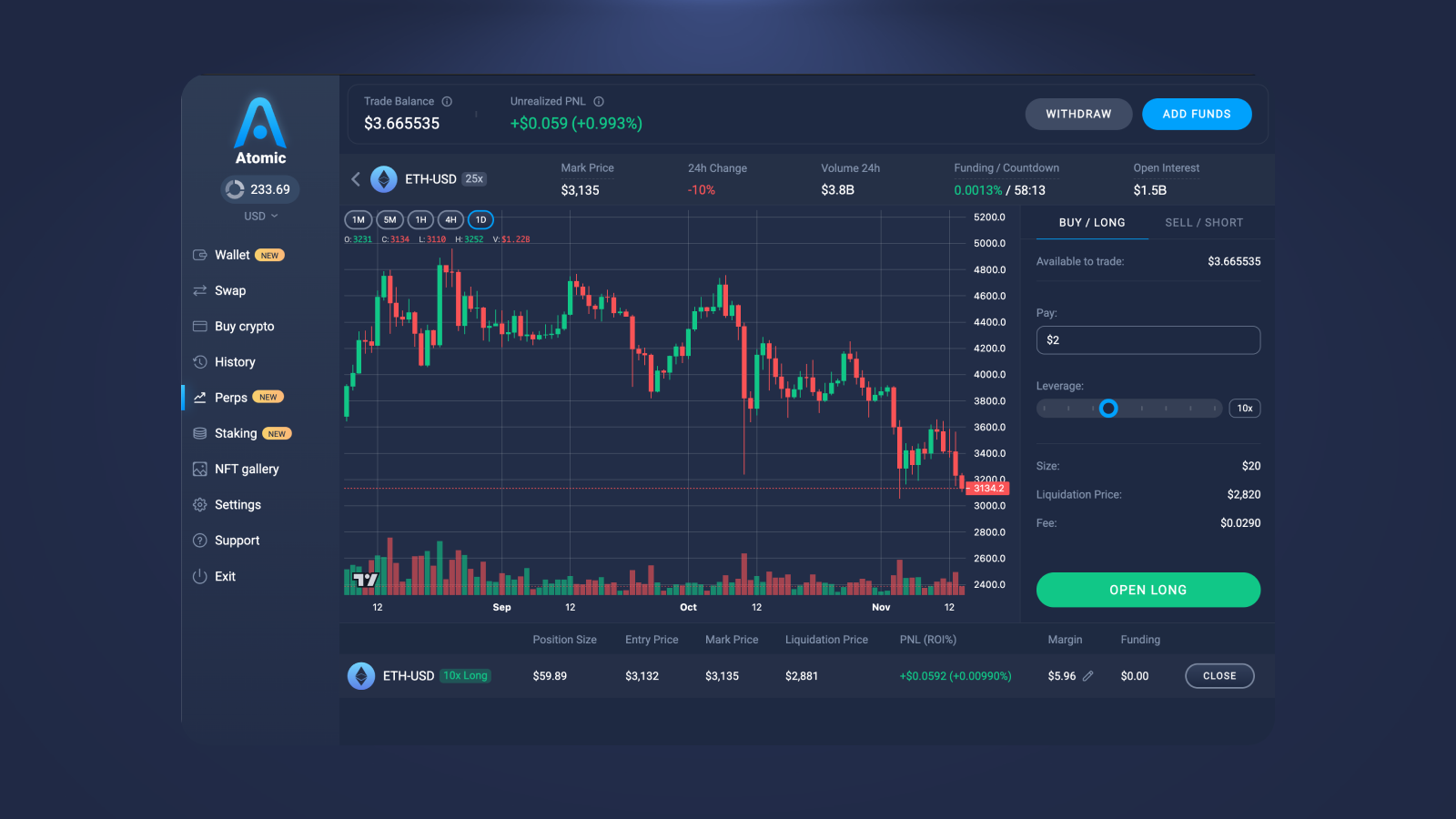
Margin is the collateral you lock up to open and hold a leveraged position. Two thresholds govern every trade: initial margin and maintenance margin. Initial margin is the amount required to enter the trade, calculated as position size divided by leverage. Maintenance margin is the minimum balance you must keep to avoid liquidation. If your account value drops below this level, the protocol will automatically close your position.
How is onchain margin different from CEX margin?
On centralized exchanges (CEX), your margin sits in the exchange’s internal ledger. Onchain, it is locked in a smart contract. This means you retain custody of your funds until the trade is active, but you must pay onchain transaction fees for every adjustment, such as adding collateral or closing a position. On CEXs, these adjustments are often free or low-cost internal updates.
What are the main risks of onchain perpetuals?
The primary risks are liquidation and smart contract vulnerability. Onchain perps often use automated market makers (AMMs) or oracle feeds to price assets. If an oracle lags or a contract has a bug, your position could be liquidated at a worse price than expected. Additionally, you are responsible for managing your own wallet security; losing your private keys means losing access to your locked margin.
Can I use existing crypto assets as margin?
Yes, most onchain perp platforms accept volatile assets like ETH, SOL, or stablecoins as collateral. However, because these assets fluctuate in price, they are often subject to a "haircut." For example, a protocol might only count 80% of your ETH’s value toward your margin requirement. This protects the protocol if the value of your collateral drops sharply while your position is open.
No comments yet. Be the first to share your thoughts!