
How onchain perp margin works
Margin acts as the collateral required to open and maintain a leveraged position in decentralized perpetual futures. Unlike spot trading, where you pay the full asset price, margin trading allows you to control a larger position with a smaller amount of capital. This capital serves as a guarantee against potential losses, ensuring that the protocol remains solvent even if the trade moves against you.
The initial margin needed to enter a trade is calculated using a straightforward formula: position size multiplied by the mark price, divided by the leverage factor. For example, to open a $10,000 position with 10x leverage, you only need $1,000 in collateral. This mechanism amplifies both potential gains and losses, making precise risk management essential for onchain traders.
Cross margin vs isolated margin onchain
Choosing between cross and isolated margin on perpetual DEXs determines how your capital buffers against volatility. Cross margin aggregates your entire wallet balance as collateral, maximizing capital efficiency but exposing all assets to liquidation risk if a single position moves against you. Isolated margin assigns a fixed amount of collateral to each trade, containing losses to that specific position and protecting the rest of your portfolio.
Most on-chain perpetual platforms, such as those detailed by LCX, now support both modes to accommodate different risk tolerances. Understanding the mechanics of how smart contracts calculate margin requirements is essential, as noted in The Bitcoin Manual regarding the operational differences in these systems.
| Feature | Cross Margin | Isolated Margin |
|---|---|---|
| Capital Efficiency | High (uses full balance) | Low (fixed allocation) |
| Liquidation Risk | Spreads across all assets | Confined to isolated amount |
| Complexity | Requires global balance monitoring | Simple per-trade accounting |
| Best For | Long-term hedging or high leverage | Short-term speculation |
Cross margin is ideal for traders who want to minimize the number of liquidations by utilizing idle assets as collateral. However, a sharp market move can drain your entire balance, wiping out unrelated positions. Isolated margin is the safer choice for speculative trading, as it ensures that a failed trade does not compromise your broader financial position on the chain.
| Feature | Cross Margin | Isolated Margin |
|---|---|---|
| Collateral Source | Entire wallet balance | Allocated per position |
| Liquidation Impact | All assets at risk | Only isolated funds lost |
| Capital Efficiency | High | Low |
| Risk Management | Complex, global view | Simple, per-trade view |
How leverage and margin mode set your liquidation price
Liquidation is the moment your position is forcibly closed because your collateral can no longer cover the losses. Understanding exactly how your liquidation price is calculated allows you to size your entry and set your stop-loss with precision. The formula is straightforward: initial margin is determined by your position size divided by your leverage. A higher leverage ratio means you are putting up less collateral relative to the total position size, which dramatically narrows the price range your asset can move against you before the system intervenes.
| Feature | Isolated Margin | Cross Margin |
|---|---|---|
| Collateral Source | Only funds allocated to the specific position | Entire wallet balance across all positions |
| Liquidation Trigger | Margin balance falls below maintenance level for that position | Total account equity falls below maintenance level |
| Risk Distribution | Losses are capped to the allocated margin | Losses draw from the entire account balance |
| Best Use Case | High-leverage speculative trades with defined risk | Market making or hedging strategies requiring stability |
Isolated margin acts like a firebreak. When you use isolated margin, you allocate a specific amount of funds to a single position. If that position is liquidated, you only lose the collateral you assigned to it. Your remaining funds in the wallet are untouched. This mode is essential for high-stakes speculative trades where you want to define your maximum loss upfront. It prevents a single bad trade from wiping out your entire account.
Cross margin, by contrast, uses your entire wallet balance as collateral. This mode is generally more resilient against minor price volatility because the liquidation price is pushed further away. However, it carries a different risk profile: a severe market crash can drain your entire account balance, not just the margin allocated to one trade. Onchain perpetuals platforms often default to one or the other, or allow you to switch, but the mechanics remain the same. Your liquidation price is simply the price level where your available equity hits the maintenance requirement.

The interaction between leverage and margin mode is multiplicative. If you are trading 20x leverage with isolated margin, a 5% move against you will liquidate your position. If you switch to cross margin with the same leverage, that 5% move might not trigger liquidation immediately because your other assets are supporting the position. However, if those other assets also drop, your liquidation price effectively moves closer to the current market price. Always calculate your liquidation price before entering. Most onchain interfaces display this dynamically, but understanding the underlying math ensures you are not caught off guard by sudden market swings.
Managing leverage across chains
Use this section to make the Onchain Perp Margin decision easier to compare in real life, not just on paper. Start with the reader's actual constraint, then separate must-have requirements from details that are merely nice to have. A practical choice should survive normal use, maintenance, timing, and budget. If a recommendation only works in an ideal situation, call that out plainly and give the reader a fallback path.
The simplest way to use this section is to write down the must-have criteria first, then compare each option against those criteria before weighing nice-to-have features.
Checklist for safe perp trading
Executing onchain perpetual futures requires strict discipline. Margin mode selection determines whether a liquidation event isolates your risk to a single position or drains your entire wallet. Before opening a trade, verify the liquidation price against your risk tolerance and ensure you have sufficient gas budget for settlement transactions.
Choose between cross-margin and isolated margin. Cross-margin shares collateral across all positions, reducing the likelihood of immediate liquidation but exposing your full balance to market swings. Isolated margin limits risk to the specific amount allocated to a trade, protecting the rest of your capital from a single bad bet.
Determine the collateral required to open your position. The formula is straightforward: position size multiplied by mark price, divided by leverage. For example, a 10x leveraged position requires only 10% of the total position value as initial margin. Ensure you understand the funding rate implications before entering.
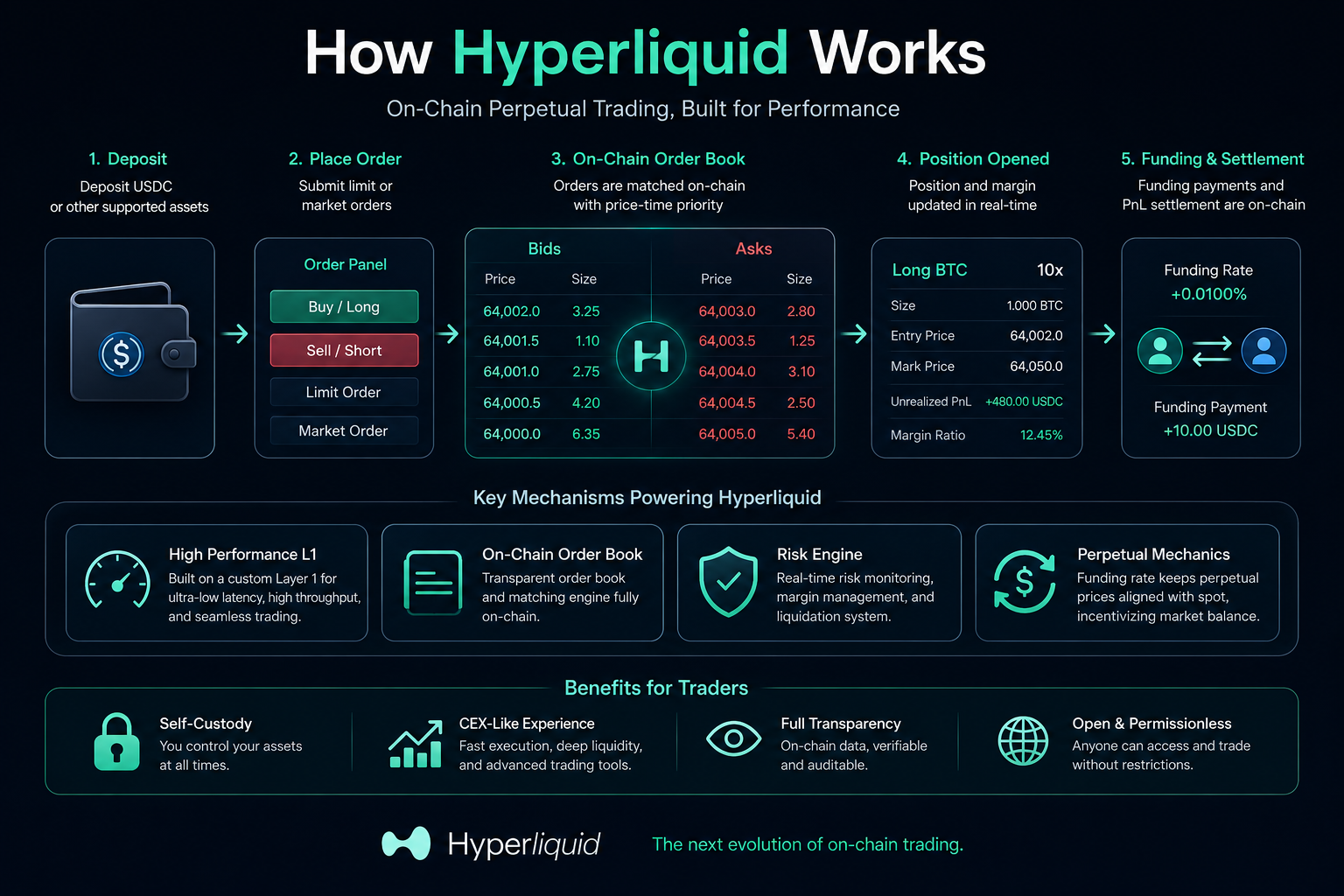
Check the calculated liquidation price against current market conditions. On-chain DEXs often use mark prices to prevent wick liquidations, but extreme volatility can still trigger cascades. Set stop-losses on separate platforms if the DEX interface lacks native risk management tools.
Onchain trading incurs network gas fees for every order modification and liquidation. Ensure your wallet holds enough native tokens (ETH, SOL, or MATIC) to cover these costs. A failed transaction due to insufficient gas can leave you exposed to adverse price movements without executing your exit strategy.
Always review the smart contract terms. On-chain perpetuals operate through code that handles order matching and margin calculations automatically. Understanding the oracle delay and liquidation penalty structures is essential for long-term survival in leveraged trading.
No comments yet. Be the first to share your thoughts!