
Onchain perp margin limits to account for
Onchain perpetual futures are leveraged contracts that track an asset's price without an expiry date. You are not buying the underlying asset; you are taking a position on its future direction. To open and hold these positions, you must deposit collateral, known as margin, which acts as a guarantee against potential losses.
Two specific margin thresholds govern every onchain perp position: initial margin and maintenance margin. Initial margin is the minimum collateral required to open a trade. Maintenance margin is the minimum balance you must keep in your account to prevent liquidation. If your position's value drops and your margin falls below this maintenance level, the protocol will automatically close your position.
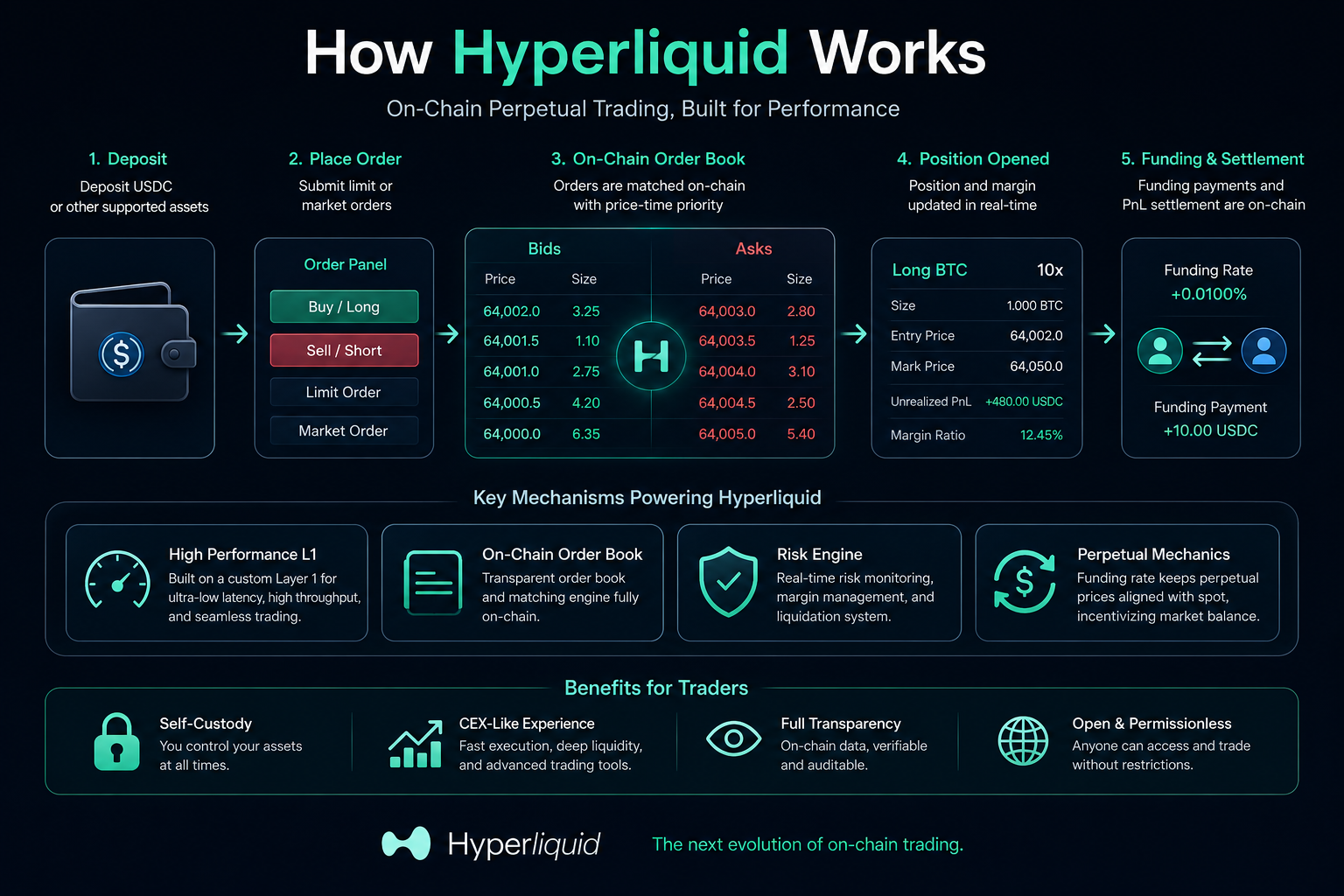
Most onchain platforms, such as Hyperliquid, margin positions in stablecoins like USDC. This setup allows for high leverage, but it also means losses are multiplied. Understanding these constraints is the first step in managing risk before optimizing for funding rates.
Onchain perp margin choices that change the plan
When trading onchain perpetuals, margin acts as the collateral that keeps your position open. Unlike traditional futures, these contracts have no expiry date, meaning your margin must cover both price volatility and funding rate payments indefinitely [src-4]. The primary goal is to use this capital efficiently to lower your cost basis while avoiding liquidation.
Every leveraged position is governed by two distinct thresholds: initial margin and maintenance margin [src-1]. Initial margin is the minimum deposit required to open the trade, while maintenance margin is the floor below which your position gets automatically closed. The gap between these two numbers determines your liquidation price. A wider gap means you need more buffer against market swings, which ties up more capital.
Leverage amplifies both gains and losses. On platforms like Hyperliquid, positions are often margined in stablecoins like USDC, allowing for high leverage ratios [src-2]. However, higher leverage shrinks the distance to your liquidation price. A small adverse move can wipe out your entire margin deposit. Evaluating the tradeoff between leverage height and margin safety is the first step in optimizing for ROI.
The funding rate is the second major cost driver. Traders paying positive funding rates are effectively renting their leverage. If you hold a long position in a bullish market, you may pay shorts every eight hours. This cost is deducted directly from your margin balance. Over time, high funding rates can erode profits even if the asset price remains flat.
To optimize, you must balance the capital efficiency of high leverage against the risk of liquidation and the drag of funding fees. Lower leverage requires more initial margin but provides a larger buffer against volatility. Higher leverage frees up capital but increases the risk of total loss and exposes you to funding rate volatility.
| Factor | Impact on Margin | Risk Level |
|---|---|---|
| Initial Margin | Determines position size | Low |
| Maintenance Margin | Sets liquidation price | High |
| Funding Rate | Drains margin over time | Medium |
| Leverage | Amplifies PnL and risk | High |
Choose the next step
2026 guide: Optimizing Onchain Perp Margin for Lower Funding Rates & Higher ROI works best as a clear sequence: define the constraint, compare the realistic options, test the tradeoff, and choose the path with the fewest hidden costs. That order keeps the advice usable instead of decorative. After each step, pause long enough to check whether the recommendation still fits the reader's actual situation. If it depends on perfect timing, unusual access, or a best-case budget, include a simpler fallback.

Avoid the weak options
The easiest mistake with 2026 guide: Optimizing Onchain Perp Margin for Lower Funding Rates & Higher ROI is comparing options on the most visible detail while ignoring the day-to-day constraint. A choice can look strong on paper and still fail because it is too hard to maintain, too expensive to repeat, or awkward in the actual setting. Use the same checklist for every option: fit, cost, durability, timing, upkeep, and fallback plan. That keeps the comparison practical instead of drifting into preference alone.
The simplest way to use this section is to write down the real constraint first, compare each option against it, and choose the path that still works outside ideal conditions.
No comments yet. Be the first to share your thoughts!