
How onchain perp margin works
Onchain perpetual futures rely on margin to function as a safety net for both traders and the protocol. When you open a leveraged position, you must lock up collateral in a smart contract. This collateral acts as a buffer against adverse price movements. If the market moves against your trade, losses are deducted from this margin. Understanding the difference between initial and maintenance margin is the first step in managing liquidation risk.
Initial vs. Maintenance Margin
Initial margin is the upfront collateral required to open a position. It is calculated based on your leverage; higher leverage means a lower initial margin requirement, but it also leaves less room for error. Maintenance margin is the minimum balance you must maintain to keep the position open. If your account equity drops below this level due to losses, the position is at risk of liquidation.
The gap between initial and maintenance margin is your "liquidation buffer." A wider buffer reduces the likelihood of being forced out of a trade during normal volatility. However, relying on a thin buffer with high leverage is dangerous. A small price swing can wipe out the buffer, triggering an automatic liquidation where your collateral is sold off to cover losses.
Cross-Margin as a Risk Tool
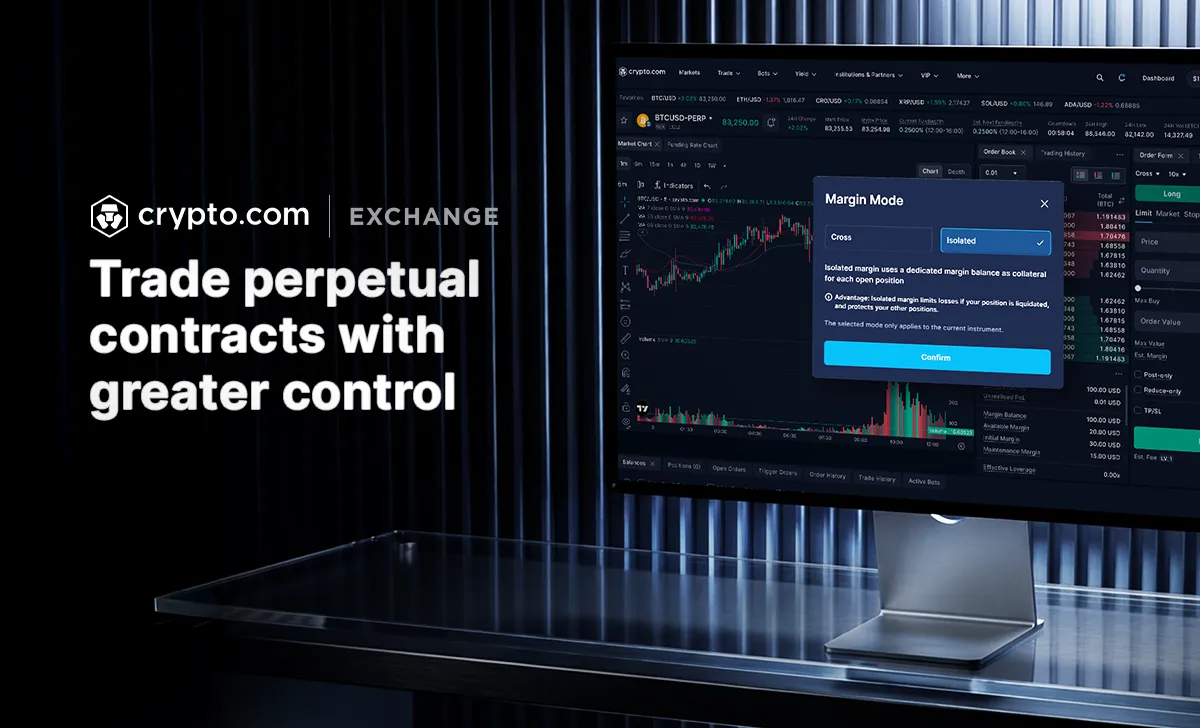
Many onchain perpetual exchanges offer cross-margin mode alongside isolated margin. In isolated margin, each position uses only its own allocated collateral. In cross-margin, all available balance in your account is shared across open positions. This means profits from one trade can help cover losses in another, effectively increasing your overall margin buffer.
Cross-margin can lower liquidation risk by utilizing idle capital that would otherwise sit unused in isolated positions. However, it also increases systemic risk: a severe move in one asset can drain your entire account balance. Use cross-margin cautiously, ensuring you have a clear risk management plan for all open positions.
Cross-margin vs isolated margin
On-chain perpetuals offer two distinct ways to post collateral: cross-margin and isolated margin. The choice between them defines your liquidation risk profile and how efficiently you use your capital. Cross-margin pools all your available balance to support a position, while isolated margin locks specific funds to a single trade.
Cross-margin acts like a shared safety net. If your position moves against you, the protocol draws from your other supported assets to prevent a liquidation. This lowers the immediate risk of being forced out of a trade during volatility, but it exposes your entire wallet balance to the risk of that specific position.
Isolated margin works like a firebreak. It restricts the collateral for a trade to a fixed amount. If the trade hits the liquidation price, only that specific portion of your funds is lost. Your remaining balance stays untouched. This is the preferred method for traders who want to cap their maximum loss on any single bet.
Use the table below to compare the mechanics and use cases for each mode.
| Feature | Cross-Margin | Isolated Margin |
|---|---|---|
| Collateral Source | All supported wallet balance | Fixed amount per position |
| Liquidation Risk | Lower (shared buffer) | Higher (fixed limit) |
| Max Loss Cap | Entire wallet balance | Only allocated funds |
| Best For | Long-term holding, low volatility | Short-term trades, high leverage |
For traders managing large portfolios, cross-margin can reduce the frequency of liquidations during market swings. However, a severe trend against a highly leveraged position can still drain the entire wallet. Isolated margin is safer for active trading, ensuring that one bad trade does not wipe out your account.
Choosing stablecoin collateral
The asset you post as collateral dictates your liquidation price. In onchain perpetual futures, liquidation is triggered when your margin falls below the maintenance requirement. If your collateral is volatile, its value can drop independently of your position’s performance, causing a premature liquidation even if the trade itself is profitable.
High-quality stablecoins like USDC and DAI are the preferred choice for managing onchain perp margin. Because their value is pegged to a fiat currency, they provide a stable buffer against market swings. This stability ensures that your liquidation price is determined solely by the direction and volatility of the asset you are trading, not by the fluctuation of your collateral.
Using volatile assets like BTC or ETH as collateral introduces unnecessary risk. If the price of your collateral drops while you hold a long position, you face a double whammy: your position loses value, and your margin shrinks simultaneously. This dynamic accelerates the path to liquidation. By sticking to stablecoins, you isolate your trading risk from your collateral risk, giving your trade more room to breathe.
Position sizing and leverage limits
Setting strict leverage caps is the most direct way to reduce liquidation risk in onchain perpetual futures. Lower leverage provides a larger buffer against price volatility, which is critical in cross-chain environments where slippage and network congestion can widen entry and exit gaps.
Define a hard limit for your account, such as 3x or 5x. This prevents emotional over-leveraging during high-volatility periods. Lower leverage directly correlates to lower liquidation risk, ensuring your position can withstand larger market swings without being forcibly closed.
Position sizing should be calculated based on your available margin, not your total portfolio value. Use the initial margin requirement to determine how much collateral is needed to open the trade, leaving the rest as a safety buffer against maintenance margin calls.
Understand the difference between initial and maintenance margin. Initial margin is the collateral required to open a trade, while maintenance margin is the lower ongoing minimum required to keep the position open. Keep your account equity well above the maintenance level to avoid liquidation.
Visualizing leverage risk
Visualizing how leverage impacts your liquidation price can help you make informed decisions. Use the chart below to track the asset you are trading and monitor volatility.
By adhering to these position sizing rules, you can manage onchain perp margin more effectively and reduce the likelihood of liquidation.
Monitoring cross-chain exposure
Trading on-chain perpetuals across multiple blockchains introduces specific risks that centralized exchanges do not present. The primary threats are bridge delays and oracle latency. When your margin is posted on a source chain but the perp market is on a destination chain, a disconnect in settlement speed can trigger unexpected liquidations.
Bridge delays are the most common culprit. If a bridge is congested, your collateral may not arrive in time to cover a margin call. Oracle latency adds another layer of risk. If price feeds on the destination chain lag behind spot markets, the perp protocol may liquidate your position based on stale data before the real price is reflected.
To manage this, monitor bridge health and oracle timestamps directly. Use a TechnicalChart to visualize the price difference between the source and destination chains. A widening spread often signals bridge congestion or oracle lag, giving you time to adjust your position before liquidation thresholds are hit.
Always keep a buffer of native gas tokens on the destination chain. This ensures you can react quickly to liquidation events without waiting for assets to bridge. Regularly check the status of the bridges you use and the health of the oracle providers. This proactive monitoring is essential for maintaining stable on-chain perp positions.
Checklist for safe margin management
Before opening or holding an onchain perp position, audit your setup against these five steps. This checklist helps you identify liquidation risks early and adjust your margin mode or collateral quality.
Most perp DEXs offer cross and isolated margin modes. Cross margin shares collateral across positions, reducing liquidation risk for a single asset but exposing your entire wallet. Isolated margin limits risk to the specific position. Choose the mode that matches your risk tolerance and portfolio size.
Not all assets are accepted as collateral. Stablecoins like USDC or USDT are typically preferred for their low volatility. If you use volatile assets like ETH or BTC, the platform will apply a higher hair-cut, meaning you need more collateral to open the same position. Ensure your chosen asset is on the platform’s approved list.

High leverage amplifies both gains and liquidation risk. A common mistake is using maximum leverage without considering funding rates or market volatility. Start with lower leverage (2x–5x) and increase only if you have a clear strategy and sufficient buffer. Remember that borrowing fees vary based on market demand, so high leverage can become expensive quickly.

Funding rates are periodic payments between long and short traders to keep the perp price close to the spot price. If funding rates are high, holding a position becomes costly. Check the current rate before entering. If you’re holding a long position during high positive funding, you’re paying shorts. Consider closing or hedging if the cost outweighs your expected profit.
Never leave your position open without an exit strategy. Set stop-loss orders to limit downside if the market moves against you. Take-profit orders lock in gains before a reversal. These orders should be based on technical analysis, not emotion. Review them regularly as market conditions change.
No comments yet. Be the first to share your thoughts!