
Set up isolated margin first
Before opening any position, switch your margin mode from Cross to Isolated. This single configuration change ensures that the collateral backing a specific trade is ring-fenced, preventing a liquidation in one market from draining the rest of your wallet.
In cross-margin mode, your entire available balance acts as shared collateral. If a single position moves against you, the protocol can liquidate enough of your total funds to cover the loss, potentially wiping out your entire account. Isolated margin treats each position as a separate risk bucket. If that specific trade is liquidated, only the funds allocated to it are lost; your remaining balance stays untouched and available for other trades.
Most perpetual DEXs and centralized exchanges now offer this isolation feature as a standard risk management tool. By explicitly allocating only the capital you are willing to lose to each trade, you maintain control over your overall exposure. This is the foundational step for managing onchain perp margin without liquidation, as it creates a hard limit on your downside.
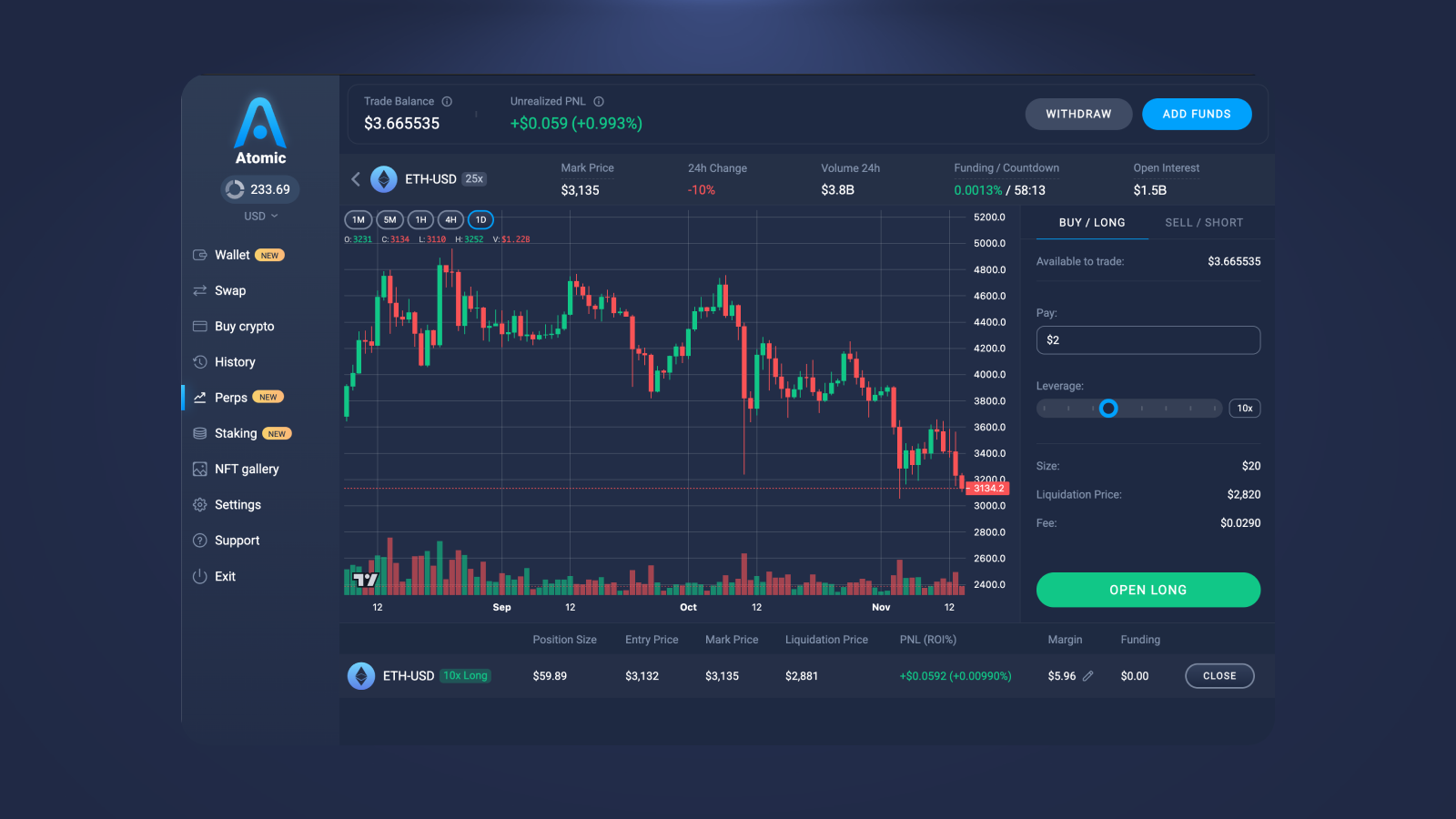
Open the trading interface for your perpetual contract. Look for the margin mode selector, typically found in the order panel or account settings. It may default to Cross or Isolated depending on your previous activity.
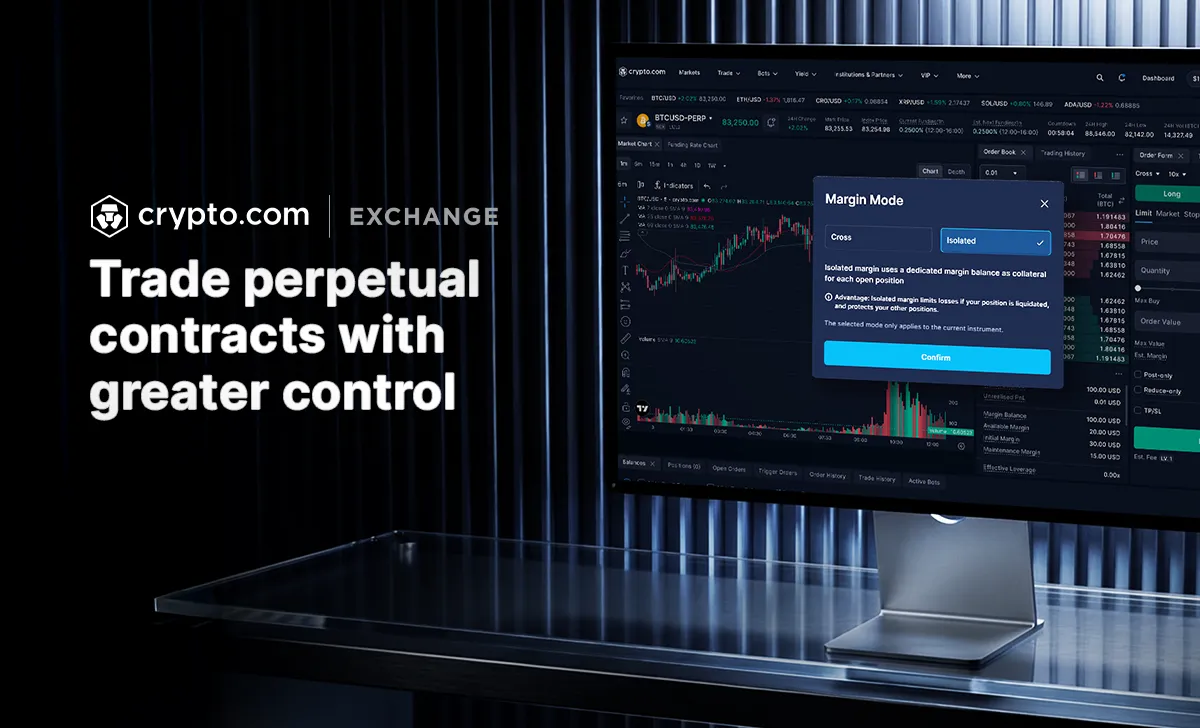
Select the Isolated option. This action does not move your funds; it simply changes how the protocol views your collateral for the upcoming trade. Your total balance remains in your wallet, but the system will now only use a specific portion for this position.
Enter the exact amount of funds you are willing to risk for this trade. This amount becomes your margin. Ensure you have sufficient remaining balance in your wallet to cover fees and other potential positions. Never allocate your entire balance to a single trade, even in isolated mode.
This setup creates a clear boundary between your active trading capital and your reserve funds. It transforms your risk profile from unlimited exposure to a defined, manageable loss. Once isolated margin is active, you can proceed to other risk controls like setting stop-losses, knowing that your core capital is protected.
Calculate leverage and entry price
Before opening a position, you must determine how much margin to post relative to your total trade size. This ratio, known as leverage, dictates your initial Loan-to-Value (LTV) and determines how much price movement can occur before you face liquidation. MetaMask Perps and other onchain platforms calculate leverage as the ratio between your trade size and your margin deposit [1]. For example, a 10x leverage position means your trade size is ten times your margin deposit.
To maintain a healthy LTV, start by defining your maximum acceptable risk. If you have $1,000 in margin and want to limit your initial LTV to 50%, you can open a position worth $2,000. This implies a 2x leverage multiplier. Higher leverage reduces the capital required but narrows the buffer against price volatility. Perps carry a high risk of total collateral loss because leverage amplifies losses just as much as gains [2].
Your entry price is the execution point where your position becomes active. Onchain perpetual futures use a funding rate mechanism to keep prices tethered to the underlying spot asset [3]. When calculating your entry, ensure the platform's fees and slippage do not push your initial LTV beyond your safety threshold. Always verify the required margin against the current market price before confirming the transaction.
Monitor liquidation price in real time
Liquidation price is the point where your collateral is insufficient to cover losses. Onchain perpetual markets calculate this dynamically based on your entry price, leverage, and the current mark price. Unlike centralized exchanges, onchain interfaces update these numbers in real time as the blockchain state changes.
Tracking this threshold prevents unexpected liquidations during volatility. Most onchain perp interfaces display your liquidation price prominently on the position dashboard. If the market moves against you, the system will automatically liquidate your position to protect the protocol's solvency.
Set up price alerts for your liquidation threshold. Use a portfolio tracker or the platform's native alert system to notify you when the mark price approaches your liquidation level. This gives you time to add margin or close the position before the liquidation event triggers.
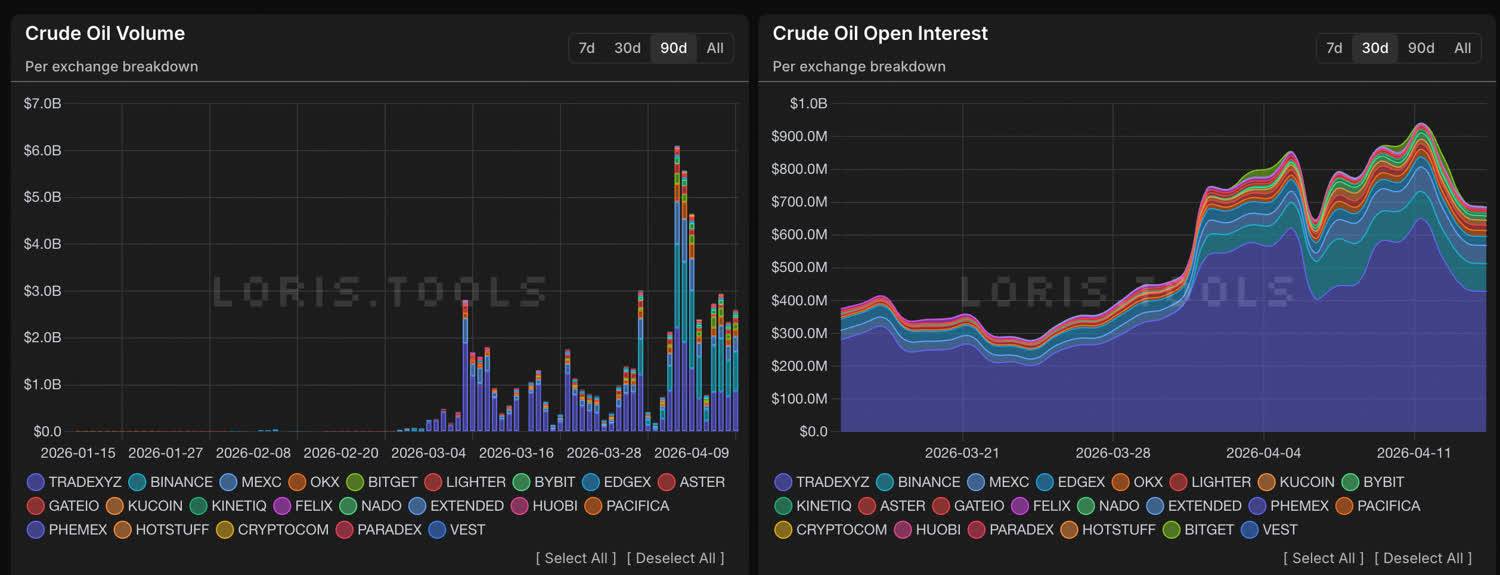
Open your active position on the perp DEX interface. Look for the "Liquidation Price" or "Margin Ratio" field. This value updates as the mark price changes. Note that some platforms use a "maintenance margin" threshold, which is higher than the initial margin.
Set an alert at 90% of your liquidation price. This buffer gives you time to react to sudden volatility. Use the platform's native alert system or a third-party tracker like DeFi Llama to monitor your position across multiple protocols.
Watch the spread between the mark price and the index price. Large deviations can signal funding rate adjustments or oracle issues. These events can trigger liquidations even if the index price hasn't moved significantly.
The chart above illustrates how price action can trigger liquidation zones. While this chart shows a centralized exchange pair, the principles apply to onchain perps. The volume spikes indicate high volatility, which is when liquidations are most likely to occur.
Add margin before liquidation hits
When your position’s Liquidation Value approaches your current collateral, you have a narrow window to act. Depositing additional collateral lowers your Loan-to-Value (LTV) ratio and pushes the liquidation price further away. This is the primary corrective action to save an under-margined position.
Verify your margin mode
Before depositing, check whether your position is in isolated or cross margin mode. In isolated mode, only the collateral allocated to that specific position is at risk. In cross mode, your entire wallet balance acts as collateral.
If you are in isolated mode, you must deposit directly into that position’s margin pool. Cross margin positions automatically draw from your available balance, so you may not need to take explicit action if you have sufficient funds elsewhere. Many perpetual DEXs support both modes to help manage risk across open positions [[src-serp-1]].
Check your LTV buffer
Calculate your current LTV to determine how much you need to add. The formula is:
LTV = (Position Size / Total Collateral) × 100
If your LTV is close to the exchange’s maintenance threshold, you are at risk. Aim to deposit enough to bring your LTV down to a safe level, typically below 50-60%, depending on the platform’s volatility settings. This buffer absorbs sudden price swings without triggering a liquidation.
Deposit additional collateral
Navigate to the position management interface and select "Add Margin" or "Deposit Collateral." Choose the asset you want to use—usually the base currency or a stablecoin like USDC. Confirm the transaction on-chain. Once the transaction is confirmed, your collateral balance updates, and your liquidation price resets to a safer level.
Set price alerts
After securing your position, set immediate price alerts for your new liquidation price. Use platform notifications or external tools to track the asset’s movement. This ensures you are notified if the market moves against you again, allowing you to react before the next liquidation event.
Common margin mistakes to avoid
Even with a solid strategy, specific errors can drain your collateral faster than market volatility. These pitfalls often stem from misunderstanding how on-chain mechanics interact with your position size.
Over-leveraging your position
Leverage lets you control a larger position with less capital, but it amplifies losses just as much as gains. MetaMask notes that 10x leverage means your trade size is ten times your margin deposit. While this increases potential profit, it drastically reduces the price movement needed to trigger liquidation. Many traders start with high multipliers without accounting for daily fees or funding costs, which slowly erode their margin buffer. Start with lower leverage (2x–3x) and increase only as you understand the specific liquidation price of your entry.
Ignoring funding rates
Perpetual futures do not have an expiration date, so exchanges use funding rates to keep the contract price close to the spot price. If you hold a long position during a period of positive funding, you pay other traders every few hours. During high volatility, these rates can spike, turning a profitable trade into a losing one purely from holding costs. Check the current funding rate before entering; if it is unusually high, consider closing the position or using a spot market instead.
Failing to account for slippage
On-chain liquidity is often thinner than on centralized exchanges. When you place a market order, especially during rapid price swings, the execution price may be significantly worse than the quoted price. This "slippage" eats into your margin immediately. Always use limit orders to control your entry and exit prices, and check the available liquidity depth before executing large trades.
Frequently asked: what to check next
What does margin mean in perps?
Margin is the collateral you deposit to open and maintain a perpetual position. It acts as a guarantee against potential losses. If your margin balance drops below the maintenance threshold, the protocol liquidates your position to cover the debt.
Is perp trading risky?
Yes. Leverage amplifies both gains and losses. A small price move against your position can wipe out your entire collateral. Perps carry a high risk of total loss and are not suitable for risk-averse investors.
What is leverage in crypto perps?
Leverage is the ratio of your trade size to your margin deposit. For example, 10x leverage means your position size is ten times your initial margin. Higher leverage reduces the price movement needed to trigger liquidation.
Why trade perps instead of spot?
Perps offer leveraged price exposure without owning the underlying asset. Unlike spot trading, you don't hold the crypto in your wallet, but you can profit from price movements in either direction using borrowed capital.
No comments yet. Be the first to share your thoughts!