
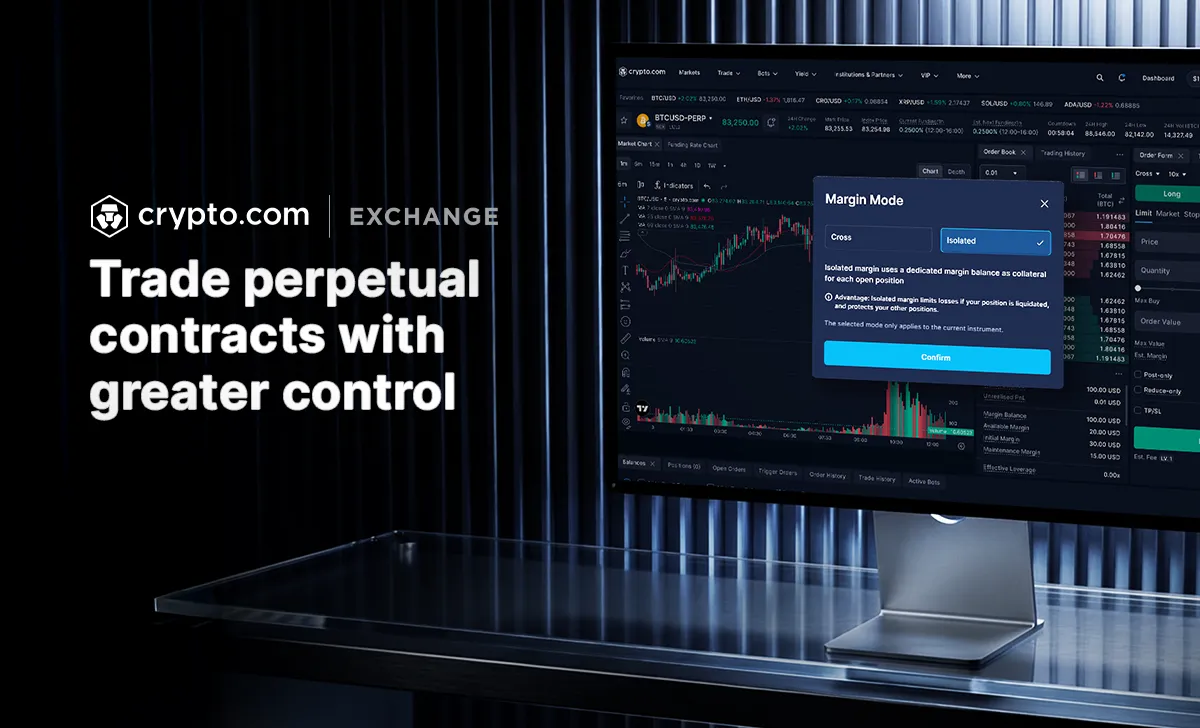
Onchain perp margin mechanics
Onchain perpetual futures let traders speculate on price movements without owning the underlying asset. Unlike traditional futures that expire on a set date, perps use a funding rate mechanism to keep the contract price tethered to the spot market. This structure allows for indefinite holding periods, provided the trader maintains sufficient collateral.
Margin is the deposit required to open and maintain these positions. It acts as a guarantee against potential losses. If the market moves against a position and the margin balance falls below a certain threshold, the position is liquidated. Understanding how margin is calculated and managed is essential for navigating the volatility of onchain trading.
Cross-margin vs. isolated accounts
The primary distinction in margin management lies between cross-margin and isolated accounts. These two modes dictate how collateral is allocated and how risk is distributed across your portfolio.
Cross-margin pools all available balance in a designated wallet or account into a single margin pool. This shared liquidity supports all open positions. If one position gains value, that profit can offset losses in another. This mode is efficient for hedging strategies or diversified portfolios where positions might move in opposite directions. However, it carries higher risk: a significant adverse move in any single position can drain the entire pool, potentially liquidating all open trades.
Isolated accounts assign a fixed amount of margin to each individual position. The collateral for one trade is strictly separated from others. If a position is liquidated, the loss is limited to the isolated margin allocated to that specific trade. The rest of the portfolio remains untouched. This mode offers precise risk control, making it suitable for traders who want to limit exposure on high-volatility assets. It prevents a single bad bet from wiping out the entire account.
Choosing between cross and isolated margin depends on risk tolerance and strategy. Cross-margin maximizes capital efficiency by leveraging the entire balance, while isolated margin prioritizes protection by capping potential losses per trade. Onchain platforms often allow traders to switch modes or adjust isolated limits dynamically, providing flexibility in managing onchain perp margin.
Cross-margin vs isolated margin choices that change the plan
Choosing between cross-margin and isolated margin determines how your portfolio absorbs volatility. Cross-margin pools all available balance in your account to support open positions, maximizing capital efficiency. Isolated margin assigns a fixed amount of collateral to each position, ring-fencing the risk to that specific trade.
The decision hinges on your portfolio size and risk tolerance. Cross-margin acts like a shared safety net; it prevents individual positions from liquidating as long as the overall account health remains strong. This mode is ideal for diversified portfolios where gains in one asset can offset losses in another. However, it exposes your entire balance to liquidation if the market moves against you broadly.
Isolated margin limits your downside to the collateral allocated to that single position. If the trade fails, you lose only that specific amount, leaving the rest of your portfolio intact. This approach suits traders who want precise control over risk exposure per trade, preventing a single bad bet from draining their entire account. It is essentially a fire wall that contains the damage.
The table below outlines the structural differences between these two modes.
| Feature | Cross-Margin | Isolated-Margin |
|---|---|---|
| Risk Exposure | Entire account balance | Allocated collateral only |
| Liquidation Trigger | Account health ratio drops | Position margin ratio drops |
| Capital Efficiency | High (shared liquidity) | Lower (locked per trade) |
| Best For | Diversified portfolios | High-conviction single trades |
For onchain perpetual trading, understanding these mechanics is critical. As noted by MetaMask, margin modes shape how risk is managed in perpetual futures trading. You must align your margin choice with your strategy. Using cross-margin for a concentrated, high-leverage bet can lead to total account loss. Using isolated margin for a diversified, low-leverage strategy ties up capital inefficiently. Match the mode to the position size and your overall portfolio health.
How cross-margin pools handle liquidation risk
Cross-margin trading operates on a simple premise: pool collateral. Instead of isolating risk within a single position, the protocol aggregates the margin from all active traders in a specific pool. This shared liquidity buffer acts as a shock absorber, allowing individual traders to withstand larger price swings without triggering an immediate liquidation. For the isolated trader, this structure significantly reduces the frequency of forced exits, turning what might have been a catastrophic stop-out into a manageable drawdown.
The mechanism relies on the law of large numbers. When one position moves against its holder, the losses are distributed across the entire pool’s capital reserves. As long as the pool remains solvent, the system prioritizes keeping positions open, giving traders more time to add margin or wait for market reversal. This efficiency is a primary driver behind the rapid adoption of cross-margin perpetuals on decentralized exchanges, where volume has surged as traders seek to minimize friction during high-volatility periods.
However, this efficiency comes with a hidden cost: systemic correlation risk. Because all positions share the same liquidity pool, a sharp, correlated move across multiple assets can drain the entire buffer simultaneously. In a traditional isolated margin setup, a crash in one market only affects that specific position. In a cross-margin pool, a broad market sell-off can trigger cascading liquidations across dozens of unrelated positions, potentially wiping out the pool’s reserve and leaving remaining traders with insufficient coverage.
The risk is not just theoretical. As onchain perpetual volume scales, the size of these pools grows, meaning the potential impact of a systemic failure increases. Traders must recognize that while cross-margin reduces individual liquidation risk, it introduces exposure to the collective behavior of the entire market. During extreme volatility, the shared pool can become a point of failure, where the very mechanism designed to protect traders becomes the conduit for widespread losses.
Monitoring market stress
To navigate this risk, traders must monitor not just their own positions but the health of the broader market and the specific pool they are trading in. High correlation between assets in the pool is a red flag, as it reduces the diversification benefit of the shared margin. Similarly, rapid changes in pool utilization rates can signal impending liquidity stress.
The chart above illustrates how Bitcoin’s price action often drives broader market sentiment. In cross-margin pools that hold BTC and correlated assets, a sharp drop in BTC can quickly deplete the pool’s buffer, affecting even uncorrelated positions. Traders should use such charts to gauge overall market stress and adjust their margin allocation accordingly, perhaps by moving to isolated margin during periods of high volatility to protect their capital from systemic pool failures.
2026 leverage strategies for efficiency
Onchain perp margin efficiency in 2026 is no longer about finding the highest leverage; it is about optimizing the capital you commit to withstand volatility. As onchain perpetual futures mature into blockchain-based infrastructure, the gap between traditional off-chain exchanges and decentralized protocols is closing, but the mechanics of risk remain distinct. To trade efficiently, you must treat margin as a dynamic resource rather than a static deposit.
Cross-margin pooling for capital density
The most significant efficiency gain in 2026 comes from cross-margin architectures. Unlike isolated margin, which locks capital to a single position, cross-margin allows your entire account balance to back all open positions. This pooling effect means you can maintain larger positions with less individual capital at risk, provided your overall portfolio remains balanced. It acts as a shock absorber, preventing a single losing trade from triggering a liquidation when the rest of your positions are profitable.
However, this efficiency is a double-edged sword. If your positions are highly correlated—such as long ETH and long SOL—a market downturn can drain the entire pool simultaneously. Efficiency here requires diversification across uncorrelated assets or hedging strategies to ensure the "pool" retains enough liquidity to absorb shocks.
The 1% rule for onchain volatility
Onchain markets exhibit higher volatility and unique liquidation risks due to oracle delays and gas fluctuations. The 1% rule remains the most effective strategy for preserving capital in this environment. This principle dictates that you never risk more than 1% of your total account equity on a single trade. In the context of onchain perp margin, this means calculating your position size based on the distance to your stop-loss, not just your available balance.
By strictly adhering to this rule, you ensure that a series of losses cannot wipe out your margin pool. It forces a conservative approach that aligns with the unpredictable nature of decentralized liquidity. This discipline is more critical on-chain than off-chain because the cost of error—slippage, failed transactions, and oracle gaps—can amplify losses beyond standard market movements.
Monitoring real-time margin ratios
Static margin ratios are obsolete in 2026. Efficiency requires monitoring real-time health factors that account for changing volatility and funding rates. Use live provider-backed data to track your margin ratio against the asset's current price action. This allows you to adjust positions proactively rather than reacting to liquidation warnings.
This approach shifts your focus from passive holding to active management. By keeping a close eye on real-time data, you can identify when a position is becoming inefficient—either by tying up too much capital or by exposing you to disproportionate risk—and rebalance before the market moves against you.
Margin questions for perp traders
Margin is the collateral you deposit to open a position. It acts as a guarantee against losses, ensuring you can cover potential moves before the exchange liquidates your position. Without sufficient margin, the protocol cannot guarantee the trade's settlement.
The 1% rule is a core risk management strategy. It dictates that you never risk more than 1% of your total account equity on a single trade. This preserves capital during volatile swings, preventing a single bad entry from wiping out your portfolio.
Cross-margin efficiency allows your entire balance to back a position, unlike isolated margin which caps risk to a specific allocation. Understanding these definitions helps you choose the right mode for your risk tolerance.
No comments yet. Be the first to share your thoughts!