
Get Onchain Perp Margin Right
Onchain perpetual futures allow traders to speculate on asset prices with leverage, but they lack the circuit breakers of centralized exchanges. A sudden price spike can trigger instant liquidation if your margin setup is incorrect. Before placing a trade, verify your environment handles leverage risk properly.
The first step is choosing between cross and isolated margin. Cross margin uses your entire connected wallet balance as collateral, which is efficient but dangerous; a single bad trade can drain all your funds. Isolated margin restricts collateral to the specific position size, capping your loss. For minimizing risk, isolated margin is the standard starting point.
Next, ensure your wallet is connected only to the specific dApp you are trading. Many onchain perps require you to approve token allowances. If you approve unlimited spending rights for a risky contract, you could lose your assets even if the trade itself is profitable. Always check the contract's allowance settings before confirming the transaction.
Finally, understand the oracle mechanism. Perps rely on price oracles to determine entry and exit prices. If the oracle data is delayed or manipulated during high volatility, your position might be liquidated at a worse price than expected. Verify that the protocol you are using has a robust oracle feed with multiple data sources. This step is critical for avoiding liquidation traps.
Checklist for Safe Setup
-
Select isolated margin for new positions
-
Verify oracle data sources are decentralized
-
Set maximum position size limits
-
Review token allowance permissions
-
Monitor funding rates before entry
Work through the steps
Onchain perpetual margin trading requires strict risk management, especially when using real-time oracle data to avoid liquidation. The following steps outline how to set up a position that minimizes the chance of being forcefully closed out.

Cross margin uses your entire wallet balance to keep a position open, while isolated margin limits risk to a specific allocation. For minimizing liquidation risk, isolated margin is often safer because it prevents a single bad trade from draining your entire portfolio. MetaMask’s guide to cross vs. isolated margin explains how each mode affects your exposure during volatile market swings.

Onchain perpetuals rely on decentralized oracles to provide price data. Ensure the platform you are using has multiple oracle sources to prevent manipulation. A single faulty data point can trigger a premature liquidation. Check the protocol’s documentation to see which oracles are active and how they handle price discrepancies.

High leverage amplifies both gains and losses. While 20x leverage on $10 might seem like a way to control a large position, it leaves very little room for error. A small price movement against you can wipe out your entire margin. Start with lower leverage, such as 2x or 3x, to give your position more breathing room against volatility.

Funding rates are periodic payments between longs and shorts to keep the perp price close to the spot price. If you hold a long position during a high positive funding rate, you pay shorts. If the rate is negative, you receive payments. High funding rates can erode your profits over time, so factor this into your entry and exit strategy.
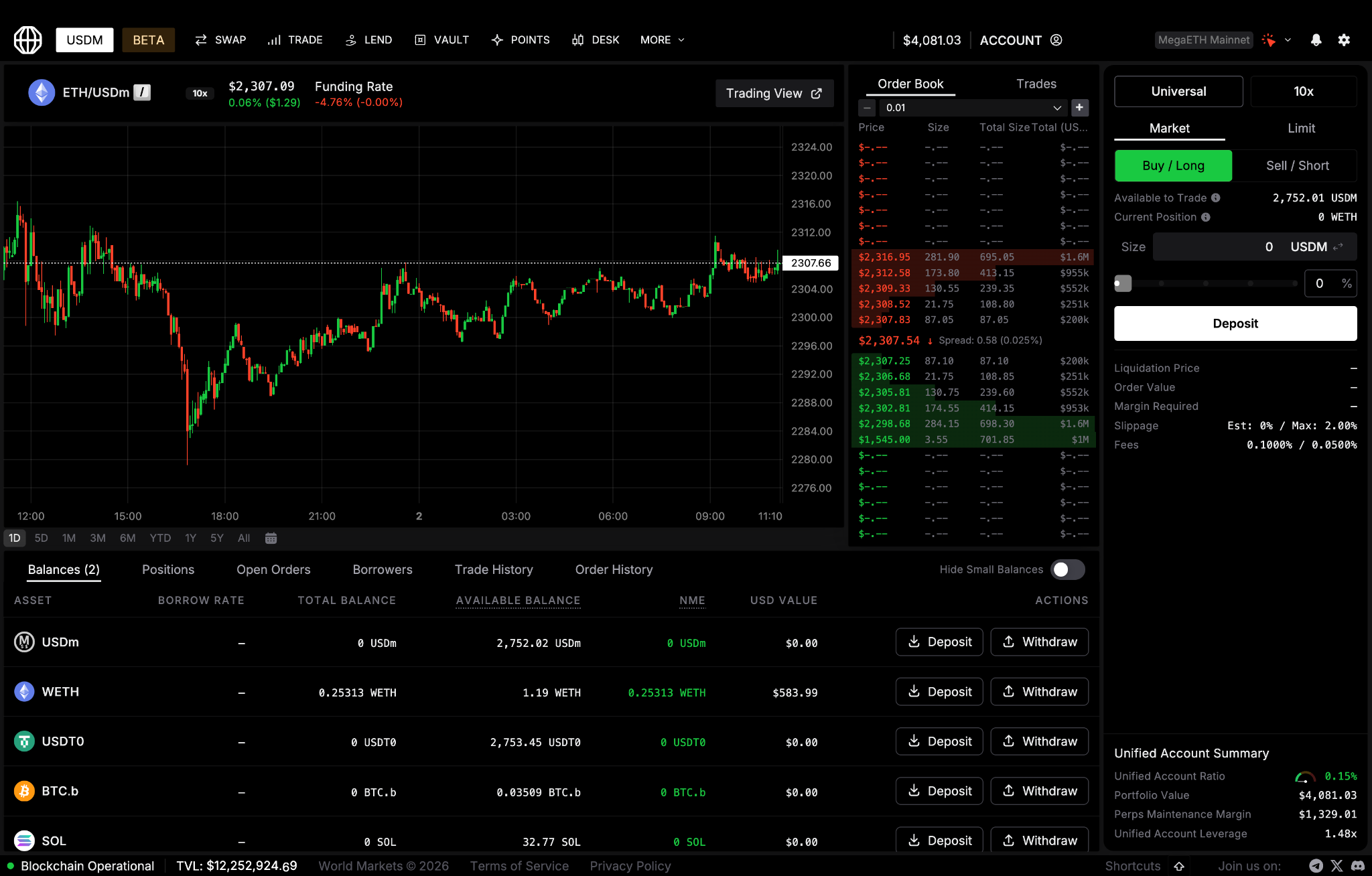
Automated stop-loss orders can protect your capital by closing your position at a predetermined price. This is crucial in onchain trading where manual intervention might be too slow during a flash crash. Set your stop-loss at a level that aligns with your risk tolerance and the asset’s historical volatility.
-
Select isolated margin for tighter risk control
-
Confirm oracle redundancy on the trading platform
-
Limit leverage to 3x or lower initially
-
Check current funding rates before entering
-
Set a stop-loss order immediately after opening
Common Onchain Perp Margin Mistakes
Even with real-time oracle data, traders often lose capital due to structural errors rather than market direction. The following mistakes are frequent causes of unnecessary liquidations in decentralized perpetual markets.
Using Cross Margin for Volatile Positions
Cross margin links your entire account balance to a single position. While this lowers the immediate liquidation price, it exposes your full wallet to total loss if the market moves sharply against you. In onchain environments, where oracle feeds can experience brief lags or spikes, a sudden price jump can drain your entire balance before you can react. Isolated margin limits the risk to the specific funds allocated to that trade, preserving the rest of your capital for future opportunities.
Ignoring Funding Rate Costs
Funding rates are periodic payments exchanged between long and short traders to keep the perp price close to the spot price. If you hold a leveraged position for days or weeks, these fees accumulate. A positive funding rate means longs pay shorts; a negative rate reverses this. Many traders focus solely on the entry price and ignore the daily or hourly cost of holding the position. Over time, high funding rates can erode profits or force a liquidation even if the asset price remains stable.
Overleveraging Without Slippage Buffers
High leverage amplifies both gains and losses, but it also increases slippage impact during execution. When opening or closing a large position, the trade may not fill at the quoted price due to limited liquidity on the order book. If you use 20x leverage, a 5% price move wipes out your margin. Add slippage, and a smaller 3% move might trigger the liquidation. Always calculate the break-even price including estimated slippage and funding costs before entering the trade.
No comments yet. Be the first to share your thoughts!