
Onchain perp margin limits to account for
Onchain perpetual futures use margin to secure positions against market volatility. The margin system defines two critical boundaries: the entry cost and the liquidation threshold. Understanding these constraints is essential for managing risk in high-leverage environments.
Margin comes in two primary forms: isolated and cross. Isolated margin assigns a fixed amount of collateral to a single position. If the position moves against you, only that specific allocation is lost. This limits downside exposure but requires more capital to maintain multiple open positions simultaneously. Cross margin pools all available wallet balance as collateral for a single position. This approach allows for higher leverage efficiency by using idle funds to absorb volatility, but it exposes the entire wallet balance to liquidation risk if the market moves sharply.
The margin level determines when a position is at risk. A margin level of 300% means your collateral is three times the maintenance margin required. If the price moves against you and the margin level drops to 100%, the position is liquidated. Higher leverage reduces the buffer between entry and liquidation, making margin constraints more critical.
| Feature | Isolated Margin | Cross Margin |
|---|---|---|
| Collateral Source | Fixed amount per position | Entire wallet balance |
| Risk Exposure | Limited to allocated funds | Full wallet balance at risk |
| Leverage Efficiency | Lower (capital inefficient) | Higher (capital efficient) |
| Liquidation Risk | Isolated to position | Affects entire wallet |
Choosing between isolated and cross margin depends on your risk tolerance and trading strategy. Isolated margin is safer for new traders or those testing new strategies. Cross margin is better for experienced traders who want to maximize capital efficiency and are willing to accept higher overall risk.
Onchain perp margin choices that change the plan
Choosing the right margin mode on onchain perpetuals directly impacts your exposure to funding rates and liquidation thresholds. Unlike centralized exchanges, onchain platforms often require you to select between isolated and cross-margin structures before opening a position. This choice dictates how much capital remains locked as collateral and how vulnerable your position is to market volatility.
To help you evaluate these tradeoffs, here is a comparison of the primary margin structures available on leading onchain perp DEXs.
| Feature | Isolated Margin | Cross Margin |
|---|---|---|
| Capital Efficiency | Low – funds locked per position | High – shared across positions |
| Liquidation Risk | Contained to position size | Spreads to full wallet balance |
| Funding Rate Impact | Neutral – no cross-subsidy | May benefit from pool liquidity |
| Complexity | Simple – clear max loss | Complex – requires monitoring |
Isolated margin limits your potential loss to the specific amount allocated to that trade. This is ideal for high-leverage strategies where you want to protect the rest of your portfolio from a single bad entry. However, it requires more frequent rebalancing and often offers less leverage because the collateral cannot support other positions.
Cross margin pools all your available balance to support open positions. This structure allows for higher effective leverage and can help you survive short-term volatility without liquidation. The tradeoff is that a sharp market move can drain your entire wallet balance, not just the funds tied to one trade. Many traders use cross margin for trend-following strategies but keep their overall exposure low to avoid catastrophic loss.
The decision ultimately depends on your risk tolerance and trading style. If you are new to onchain perps or trading volatile assets, isolated margin provides a clear safety net. Experienced traders managing multiple positions may prefer cross margin for its capital efficiency, provided they actively monitor their margin levels.
Always check the specific platform’s liquidation engine. Some onchain DEXs use oracle-based liquidations that can be exploited during low-liquidity events, making margin choice even more critical than on traditional CEXs.
Choose the next step
Selecting a margin mode and leverage level is a tradeoff between capital efficiency and liquidation risk. There is no single optimal setting; the right choice depends on your risk tolerance, the volatility of the asset, and your exit strategy. Use the following framework to decide how to structure your onchain perp position.

| Feature | Isolated | Cross |
|---|---|---|
| Risk Scope | Limited to allocated collateral | Entire wallet balance at risk |
| Capital Efficiency | Lower; idle funds unused | Higher; idle funds support margin |
| Liquidation Risk | Predictable; only position liquidated | Unpredictable; entire wallet can liquidate |
Use isolated margin if you want to cap your losses to a specific amount. This is the safer choice for volatile assets or when you are unsure about an exit. Use cross margin only if you have excess stablecoins in your wallet and want to avoid liquidation from minor price spikes. Note that cross margin exposes your entire portfolio to the position.
Leverage amplifies both gains and losses. A common rule of thumb is to keep leverage low enough that a standard market correction (5-10%) does not trigger liquidation. For example, 20x leverage on a $10 position means a 5% move against you wipes out 50% of your collateral. Most experienced traders cap leverage at 5x-10x to maintain a buffer against volatility.
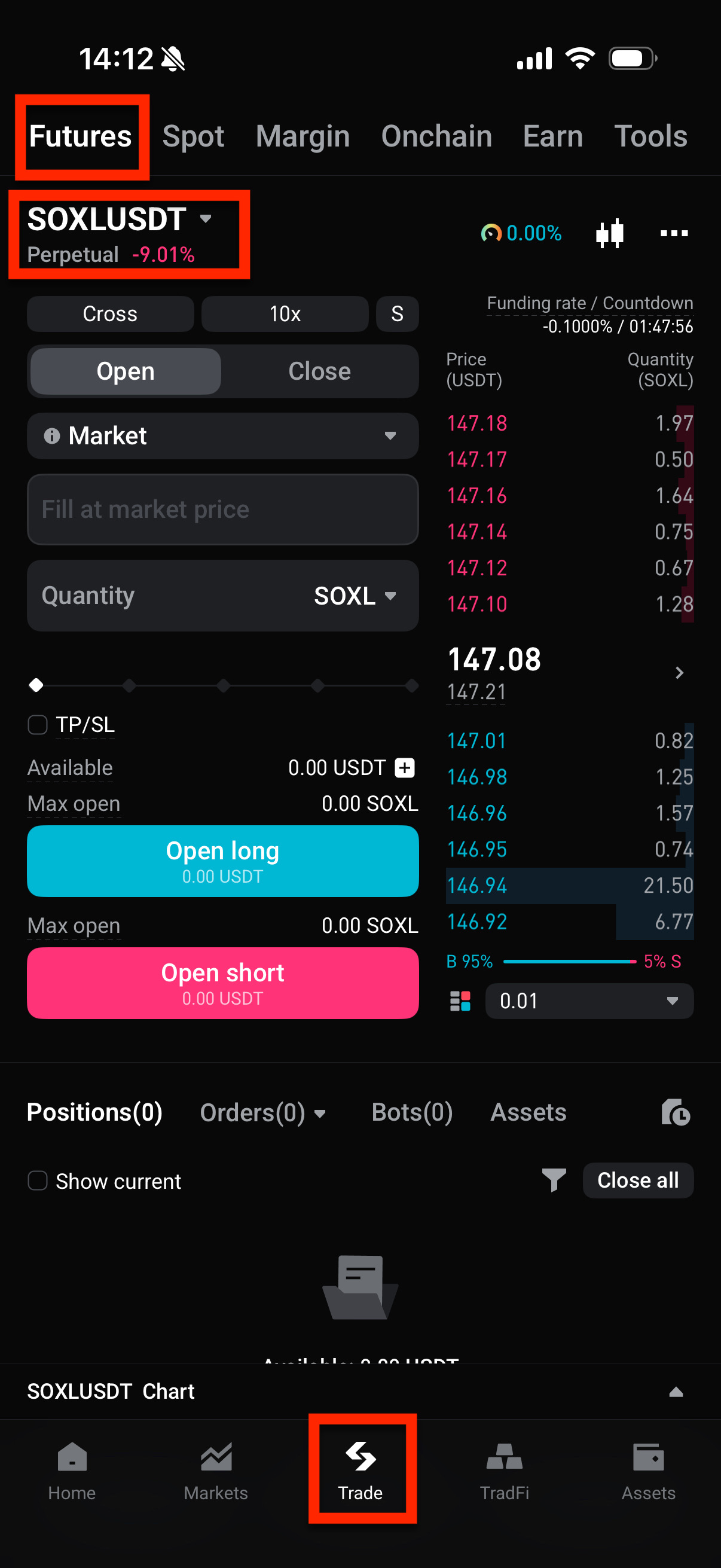
Funding rates are periodic payments between longs and shorts to keep the perp price close to the spot price. If funding is highly positive, longs pay shorts. Holding a long position during high positive funding can erode your capital over time, even if the asset price stays flat. Check the current rate before opening a long-term position.
Set stop-losses and take-profit levels before entering the trade. Onchain markets can move faster than traditional exchanges, and slippage can be significant during high volatility. Decide in advance how much you are willing to lose and when you will exit to protect profits. Never rely on hope as a risk management tool.
Spotting Weak Onchain Perp Margin Options
Many platforms market high leverage and low fees as the primary selling points for perpetual futures. This framing often obscures the mechanics of margin requirements and funding rate structures. Traders focusing solely on these advertised benefits frequently overlook the hidden costs and liquidation risks that define actual profitability.
Misleading Leverage Claims
Platforms advertising 100x or 200x leverage create a false sense of accessibility. While these limits exist, they require near-zero margin buffers. A minor price fluctuation triggers immediate liquidation. This is not a trading tool; it is a binary bet with a built-in expiry. Most professional traders never approach these limits because the risk of ruin is mathematically certain over time.
The Funding Rate Trap
Low fees mean nothing if funding rates drain your capital. Some exchanges offset low trading fees by charging aggressive funding rates during volatile markets. If you hold a position against the dominant market sentiment, you pay these rates every eight hours. Over weeks, these payments can exceed the profit from the trade itself, turning a winning position into a net loss.
Cross vs. Isolated Margin
Cross margin allows losses to drain your entire account balance, not just the allocated position. Isolated margin limits loss to the specific amount assigned. Many platforms default to cross margin without clear warnings. This design choice benefits the exchange by reducing liquidation frequency but exposes traders to total account wipeouts during black swan events.
Liquidation Mechanics
Liquidation prices are not static. They shift with market volatility and funding rates. Some platforms use aggressive liquidation engines that fill orders at worse prices during fast markets. This slippage can leave you with negative equity, owing money to the exchange. Understanding the liquidation engine is as important as understanding the entry price.
Decision Framework
Choose isolated margin for learning and small accounts. Avoid cross margin unless you fully understand the risk of total loss. Never trade leverage that exceeds your ability to monitor positions. If a platform advertises extreme leverage as a feature, it is likely optimizing for exchange revenue, not trader success.
Onchain perp margin: what to check next
These questions cover the most common concerns for traders entering onchain perpetual markets. Understanding the mechanics of leverage and margin levels is critical before placing any trade.
No comments yet. Be the first to share your thoughts!